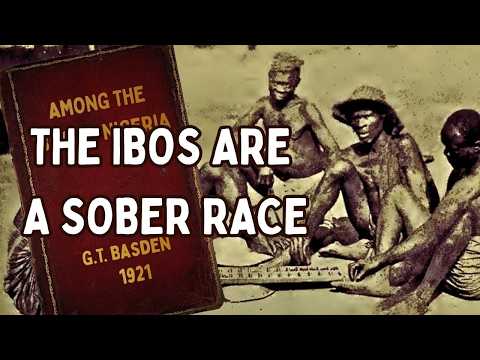
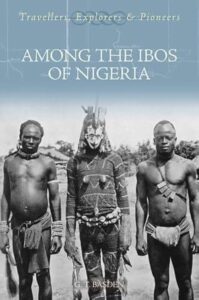
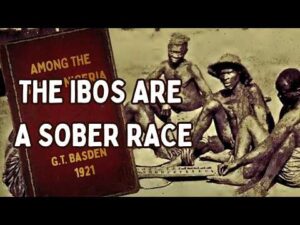
Reverend G.T. Basden’s Among the Igbos of Nigeria, published in 1921, is one of the most debated books about Igbo history. For some it is a dangerous text. For others it is an essential archive. Basden was an Anglican missionary who lived in Igboland for more than 30 years. He wrote at a time when British administration and missionary work were rapidly changing Igbo society.
The book sits in a colonial paradox. It preserves details of customs that were disappearing, while also filtering everything through a Eurocentric, missionary lens. If you read it today, you must read it critically. That is exactly why you should read it.
To understand Basden, you have to separate two things in the book.
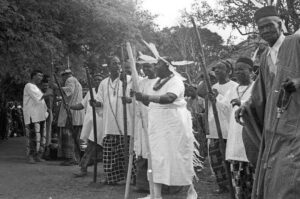
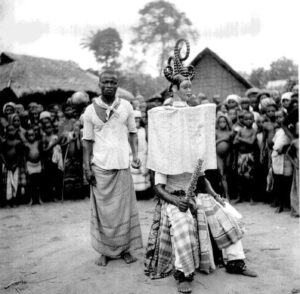
Basden documented legal structures, title systems, festivals, and spiritual practices at a time when they were being dismantled. He recorded the names of rituals, the order of village meetings, and the language used in ceremonies. For historians, this is a rare eyewitness account from the early 1900s. Some of the practices he described exist now only in memory and oral history.
Basden wrote from the perspective of the “civilizing mission.” He often used words like “primitive,” “heathen,” and “superstitious” to describe complex Igbo systems. He interpreted Igbo religion and governance through a Christian and British framework. That bias distorts meaning and erases Igbo agency.
The book is therefore both a record and a product of colonialism. You cannot take it at face value.
Chapter 25 is one of the most revealing sections. Ironically, it undermines Basden’s own claim that Igbo society was primitive, because it shows how ordered and philosophical the culture was.
Basden describes the kola nut ceremony in detail. He notes it as the first act of welcome. In Igbo thought, “Onye wetara ọjị, wetara ndụ” means “He who brings kola brings life.” The kola is not food. It is a contract of peace, respect, and goodwill between host, guest, and ancestors. Breaking kola involves prayer, acknowledgment, and agreement before any discussion begins.
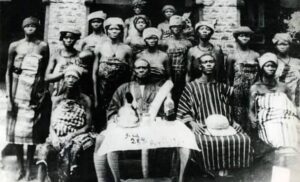
The chapter outlines strict rules for greetings, seating, and gender roles. Basden records how rooms were arranged according to age, title, and lineage. Men with the Ozo title were given specific positions. Greetings were not casual. They were poetic and transactional, used to establish respect and social rank. The space itself communicated power and order.
Basden observes that direct and intrusive questions were avoided. This reflects a wider Igbo reliance on proverbs, ilu, and indirect speech. Elders spoke in metaphor. The listener was expected to decode the meaning. Bluntness was seen as a lack of refinement. This system protected dignity and preserved wisdom across generations.
What Basden calls “custom” is actually a sophisticated system of law, diplomacy, and ethics.
You cannot read Among the Igbos of Nigeria passively. You have to read it with a filter.
Take the observation: “The village gathered for a festival on this day.”
Reject the judgment: “…to perform their superstitious rites.”
Keep the fact. Discard the bias.
Look for where Igbo intelligence and organization show through despite the language. Chapter 25 is a perfect example. The complexity Basden describes directly contradicts his label of “primitive.”
Pair Basden with Igbo scholars and writers. Read Chinua Achebe for narrative context. Read Donatus Nwoga and Adiele Afigbo for historical analysis. Use oral histories from elders. Only then do you get both the outside observation and the inside meaning.
It is dangerous because it can be misread. Taken alone, it reinforces colonial stereotypes. Taken critically, it becomes evidence of how advanced pre-colonial Igbo society was.
The danger is not in the data. The danger is in accepting the interpretation without question. That is why modern readers must approach it with training, not just curiosity.
Audio: Chapter 25.
To help you engage with the text directly, an audio reading of Chapter 25 is available. Listening allows you to hear the mechanics of the kola ceremony, the greeting protocols, and the communication rules in Basden’s own words. Use the audio alongside the critical framework above so you can separate what he saw from how he judged it.
Among the Igbos of Nigeria is not a book to be banned or blindly accepted. It is a mirror. It reflects both Igbo culture in 1921 and the British mind that was observing it.
Read it to recover lost details. Read it to understand how colonial writers thought. Read it to test your own ability to separate fact from bias.
Chapter 25 alone proves the central argument: Igbo society was not chaotic. It was governed by law, respect, and philosophy. Basden recorded it, even while he misunderstood it.
That is why, 100 years later, this remains the most dangerous, and most important, book you can read about the Igbo..See_More






Leave a Reply