General, Rtd, Moses Ali died on July 18, 2026, at Nakasero Hospital in Kampala at the age of 87. For more than five decades he was present in every major chapter of Uganda’s political and military history. From the army of Idi Amin, to rebel commander, to four-star general and senior minister under President Yoweri Museveni, Ali’s career mirrored Uganda’s turbulence. His death closes an era in which a small group of men seemed to rule forever, moving from regime to regime without leaving power.
*Military Beginnings and The Amin Era*
Moses Ali joined the Uganda Army in 1968. He rose quickly during the 1970s under President Idi Amin. By the mid-1970s he was serving as Minister of Provincial Administration and later as Minister of Finance.
Those were years of military rule, purges, and economic collapse. Ali survived where many did not. His ability to navigate the Amin government made him one of the most visible faces of that administration. When Amin was overthrown in 1979, Ali went into exile.
In exile, Ali did not retire. He formed and led the Uganda National Rescue Front, UNRF, a guerrilla group that operated in West Nile and fought against the second administration of President Milton Obote.
The UNRF became one of several armed groups that resisted Kampala governments in the 1980s. Ali earned a reputation as a tough field commander who understood both war and negotiation. For many in northern Uganda, he was a protector. For the state, he was an insurgent.
In 1986, everything changed again. President Yoweri Museveni’s National Resistance Army took power. Instead of continuing the fight, Ali brokered a peace deal. He agreed to integrate his UNRF fighters into the new national army.
That deal worked. Ali was absorbed into the Uganda People’s Defence Forces, UPDF, and rose through the ranks. He eventually attained the rank of full four-star General, one of the highest in the country’s military. It was a remarkable transition: from Amin minister, to rebel leader, to senior general in the government that defeated both.
Ali’s second life was in politics. Under Museveni, he held some of the most senior cabinet positions in Uganda.
He served as Minister of Internal Affairs, Minister of Disaster Preparedness, and at different times as First, Second, and Third Deputy Prime Minister. Few Ugandans have held that many top portfolios.
In Parliament, he was known as the “Lion of Adjumani.” He represented Adjumani West Constituency, formerly East Moyo, for decades. Even in his 80s, with visible frailty and public debate about his health, he contested and won the January 2026 general elections. He secured his seat just months before he died.
Ali’s story raises a question that comes up often in African politics. Why do some leaders stay in power into their 80s and 90s, with no time to rest or retire?
In Ali’s case, the answer is continuity. He was useful to every regime because he could deliver West Nile, he understood the army, and he could negotiate with former rebels. Each president found value in keeping him close. For Ali, politics and the military were his entire adult life. He entered government in 1968 and was still an MP in 2026.
Across the continent, this pattern repeats. Leaders die in office, or run again despite age and health concerns, because the system rewards longevity over succession. The result is a political class that seems to rule forever.
General Ali died while receiving treatment in Kampala after a period of declining health. News of his death was carried by UBC Television Uganda and other national outlets. Tributes poured in from across the political divide.
To supporters in Adjumani, he was a son of the soil who brought development and security. To critics, he was a symbol of a system where the same faces remain for half a century. Both views are true, and that is why his legacy is complicated.
General Moses Ali lived through Idi Amin, Obote II, and Museveni. He was a minister, a rebel, a general, and a parliamentarian. 54 years after he first entered public life, he was still campaigning and winning elections.
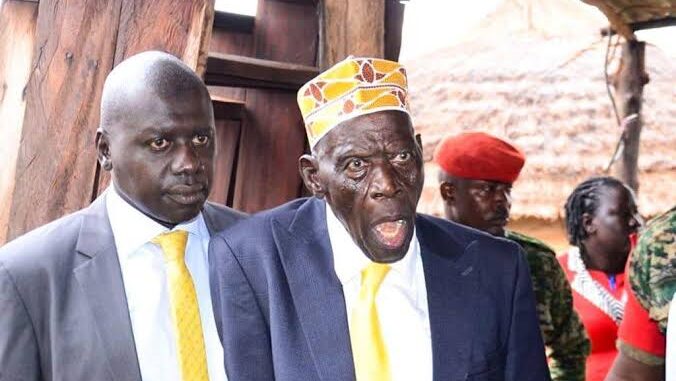
His death at 87 marks the end of a political model in Uganda, one built on survival, adaptation, and long tenure. The photos from his burial in Adjumani show crowds mourning a man they knew for most of their lives.
Uganda, like many African countries, now faces the question Ali’s career poses directly. When should leaders step aside? When does experience become entrenchment?
General Moses Ali will be remembered as a man who seemed to rule forever. The challenge for the next generation is to build a system where no one has to….See_More











Leave a Reply