
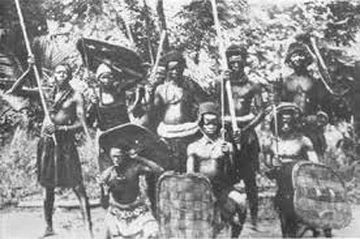
For 31 years, from 1883 to 1914, Western Igbo communities in present-day Delta State fought one of the longest anti-colonial wars in Nigeria’s history. It was not led by a king, a president, or a single general. It was led by _Ekumeku_ — a secret, decentralized society whose name means “the mighty ones who do not tire,” or in whispered tones, “do not talk about it.”
The war began with the arrival of the Royal Niger Company in the late 19th century. The Company was not just a trading outfit. It had a British charter to monopolize palm oil, ivory, and river trade, end the local commerce networks Igbo merchants controlled, and impose British administrative rule across the Niger area.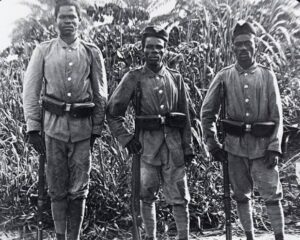
Western Igbo, or Anioma/Ebo towns like Asaba, Ogwashi-Uku, Ibusa, Ukwu-Nzu, Ubulu-Uku, and Okpanam, had no kings for the British to sign treaties with. Their society was organized around town unions, age grades, shrines, and councils. When colonial officers tried to install warrant chiefs and native courts, the communities said no.
In response, the Ekumeku society formed. It was secretive by design. Oaths, masquerades, and local intelligence networks bound towns together without creating a central command post the British could raid. The goal was simple: defend their land, trade, and way of life.
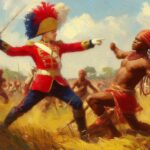
The British came with machine guns, cannons, and organized expeditions. The Ekumeku had Dane guns, machetes, poisoned arrows, and the forest.
They avoided open battles. Instead, they used deep knowledge of swamps, creeks, and dense bush around the Niger and Ase rivers. Fighters struck at night, cut telegraph wires, burned trading posts, ambushed patrols, and vanished before reinforcements arrived. There was no single “Ekumeku army” to defeat. When one town was pressured, another took up the fight.
This decentralized command structure made infiltration extremely difficult. The British could not capture one leader and end the war. The society ran on trust, oaths, and shared grievance, not on titles.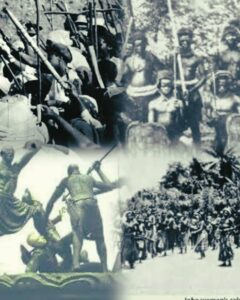
First was British military technology and relentless punitive expeditions. Between 1898 and 1911, the colonial administration launched repeated campaigns. They burned villages, seized farms, imposed heavy fines, and built forts to choke movement.
Second was economic disruption. Constant raids and farm burnings broke the food and trade cycles that sustained guerrilla fighters. When people could not plant or sell, resistance became harder to maintain.
Third was internal disunity. Western Igbo towns shared a culture, but not always a single war plan. Coordinating dozens of autonomous communities over three decades proved difficult, and fissures opened that the British exploited.
Britain did not fight Ekumeku alone. It worked with local actors who had different interests.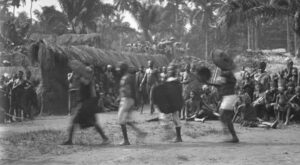
Benevolent collaborators. like Chief Ikemefuna tried to negotiate with the British to shield their towns from total destruction. The idea was to reduce casualties and preserve what could be saved, but in many cases it failed as colonial demands increased.
External collaborators. were more strategic. Prince Aigobasimwin, who later became Oba Eweka II of Benin, worked with the British. He used his influence to discourage rebellion in border areas in exchange for British support to secure his own throne. His position gave the colonial administration political leverage beyond the Western Igbo heartland.
After 1903, the administration also employed liberated slaves as interpreters, court messengers, and spies. Their language skills and local knowledge gave the British eyes and ears inside communities that had once shut them out.
The turning point came in 1911 with the fall of Awashi and the mass arrest of fighters. By 1914, the year of Nigeria’s amalgamation, Britain declared the area “pacified.” The 31-year war was over.
Today, Ekumeku is remembered as a symbol of African resilience. It was a war without a palace, without a crown, and without surrender for a generation. Historians link its guerrilla model to later liberation struggles on the continent, including the Mau Rebellion in Kenya, where forest warfare and decentralized cells again frustrated a colonial power…See More

Leave a Reply