
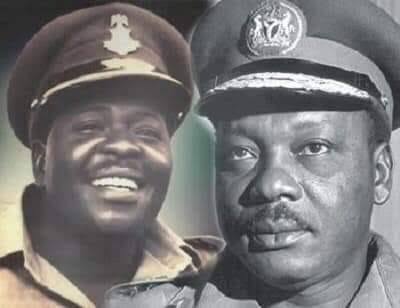
July 29, 1966, marks one of the bloodiest turning points in Nigeria’s history. On that day, Major General Johnson Aguiyi-Ironsi, Nigeria’s Head of State, and his host, Lieutenant Colonel Adekunle Fajuyi, were abducted and killed in Ibadan.
The killings were carried out during a counter-coup led by Northern officers. Sixty years later, the event is still described as the moment Nigeria’s fragile unity broke. It set the country on a path toward ethnic violence, mass killings, and eventually civil war.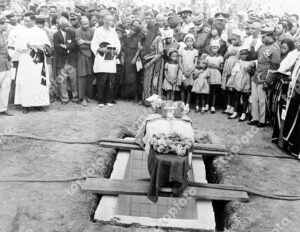
To understand Ironsi’s death, you must start six months earlier.
On January 15, 1966, a group of mostly junior army officers led by Major Chukwuma Kaduna Nzeogwu staged a military takeover. The coup targeted political leaders across the country. Among those killed were Prime Minister Sir Abubakar Tafawa Balewa, Premier of the Northern Region Sir Ahmadu Bello, and Premier of the Western Region Chief Samuel Ladoke Akintola.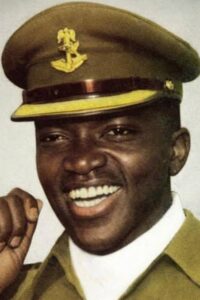
The coup failed to establish a new government, but it created chaos. Because most of those killed were from the North and West, while most of the coup plotters were from the East, it was interpreted along ethnic lines. That perception would haunt the country for years.
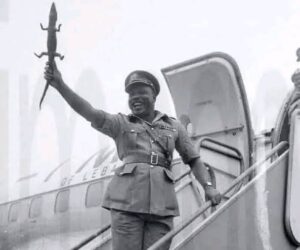
On January 16, 1966, Major General Johnson Aguiyi-Ironsi, the General Officer Commanding the Nigerian Army, stepped in to restore order. He assumed power as Head of State and Head of the Federal Military Government.
Ironsi’s stated goal was national unity and stability. He banned political parties, centralized government functions through Decree No. 34, and tried to professionalize the civil service. But his actions were seen differently in different regions. In the North, many believed the January coup was an Igbo plot and that Ironsi, an Igbo officer, was consolidating power in favor of his own ethnic group.
That mistrust grew through the first half of 1966. There were riots in Northern cities, and soldiers began to question their loyalty to a government they saw as biased.
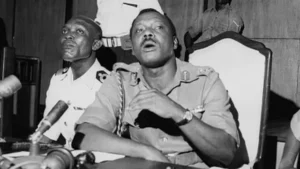
By late July, Northern officers had organized a response. They described it as a corrective measure to avenge the January killings.
On July 29, 1966, the uprising began in army barracks across the North. It quickly spread to Lagos and other commands. Officers including Major Murtala Muhammed and Lieutenant Colonel Theophilus Danjuma played leading roles. The mutineers targeted Igbo officers and soldiers, and also moved against the federal government.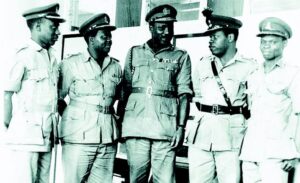
That day, General Ironsi was in Ibadan as a guest of the Military Governor of the Western Region, Lieutenant Colonel Adekunle Fajuyi, a Yoruba officer. When mutinous soldiers arrived at the Government House in Ibadan, Fajuyi could have escaped. Instead, he stayed with Ironsi. Both men were arrested, taken away in a car, and driven out of the city.
Near Ibadan, they were subjected to brutal torture and executed. Their bodies were dumped in a bush. The killings were deliberate and symbolic. They were meant to remove the Head of State and send a message about who now controlled the military.
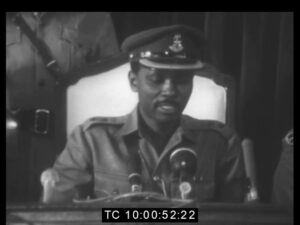
The country was thrown into a power vacuum. After days of confusion, Lieutenant Colonel Yakubu Gowon, a Northern officer, was announced as Head of State on August 1, 1966.
The July counter-coup was followed by weeks of anti-Igbo violence in the North. Thousands of civilians were killed and hundreds of thousands fled back to the Eastern Region. The federal government struggled to restore order, but trust between the regions had collapsed.
That mistrust directly led to the next crisis. In May 1967, the Eastern Region, under Lieutenant Colonel Chukwuemeka Ojukwu, declared itself the independent Republic of Biafra. The declaration triggered the Nigerian Civil War, which lasted from 1967 to 1970 and claimed more than a million lives.
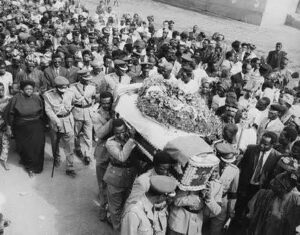
The assassination of Ironsi and Fajuyi did more than remove two men. It destroyed confidence in the idea of a neutral military and a united country.
Three issues remain central to how Nigerians remember 1966.
First, ethnicity. Both coups were read as ethnic actions, not just military actions. That framing has shaped Nigerian politics ever since.
Second, revenge. The July coup was openly presented as retaliation for January. That cycle of reprisal made reconciliation almost impossible.
Third, leadership. Fajuyi’s decision to die with his guest is still taught as an example of loyalty and honor in the military. Ironsi’s death is remembered as the end of the first attempt at military rule.
C L I C K T O S E E V I D E O…..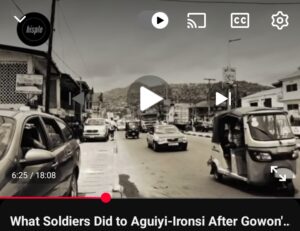
Major General Johnson Aguiyi-Ironsi ruled Nigeria for just over six months. He came to power to restore order after January 15, and he died on July 29 trying to hold the country together. Lieutenant Colonel Adekunle Fajuyi died beside him, refusing to abandon his guest.
Their abduction and execution in Ibadan was not a random act. It was the climax of a revenge coup that reversed the balance of power in the military and in the country.
Sixty years later, the events of 1966 still shape how Nigerians talk about the army, about ethnicity, and about the state. The UNTOLD TRUTH is not that the facts are hidden. The truth is that Nigeria has never fully reconciled with what those two days in January and July did to the nation. The memory of Ironsi and Fajuyi remains a wound that the country is still trying to heal…See_More
Leave a Reply