
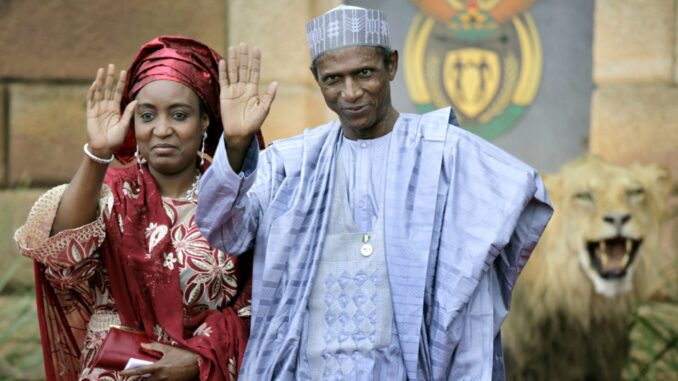
Sixteen years ago today, Nigeria lost a sitting President in silence and uncertainty. Umaru Musa Yar’Adua died on May 5, 2010, at the Aso Rock Presidential Villa, Abuja. He was 58. His death closed one of the most turbulent periods in Nigeria’s Fourth Republic — months in which the country did not know if its President was alive, governing, or even in the country.
Born August 16, 1951, in Katsina, Yar’Adua was a quiet, studious man. He served as Governor of Katsina State from 1999 to 2007 before winning the 2007 presidential election on the platform of the Peoples Democratic Party. He succeeded Olusegun Obasanjo and came into office preaching “rule of law,” due process, and transparency. On his first day he publicly declared his assets — a move that set him apart from many before him.
He is also remembered for the 2009 Niger Delta amnesty program, which convinced thousands of militants to drop arms in exchange for training and reintegration. For a time, it calmed one of Nigeria’s most volatile regions.
Behind the calm image was a man battling serious health problems. The official cause of death announced by the Presidency was acute pericarditis, an inflammation of the sac around the heart. The statement said it followed a long-standing and severe kidney disease.
Yar’Adua’s kidney condition was not new. Reports say he had a history of chronic kidney ailments and had undergone a kidney transplant years before becoming President. That alone required constant medical management.
In November 2009, he flew to Saudi Arabia for treatment and stayed away for months.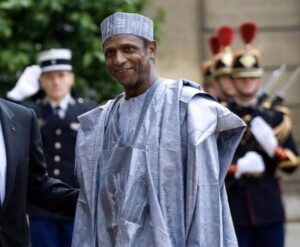
With no clear handover of power, Nigeria slipped into a constitutional crisis. Markets were nervous, the military was watched closely, and citizens asked the same question daily: who is in charge? Vice President Goodluck Jonathan eventually became Acting President in February 2010 through a National Assembly resolution, after intense pressure from civil society and the international community.
While the government stuck to pericarditis and kidney failure, other details emerged later. Leaked United States diplomatic cables published by Sahara Reporters, and other widely circulated reports at the time, claimed Yar’Adua was also dealing with Churg-Strauss syndrome, a rare autoimmune disorder, and lung cancer.
The Presidency never fully detailed his medical records or released a comprehensive health bulletin while he was in office. That lack of transparency fed speculation, rumors, and public anger. For many Nigerians, it was the first time they realized how much a President’s health could destabilize a nation.
Yar’Adua returned to Nigeria secretly in late February 2010, too ill to appear in public. He remained at the Presidential Villa under medical care. On the morning of May 5, 2010, he died at Aso Rock.
The news shocked the nation. Flags were lowered. Jonathan was sworn in as President hours later. Yar’Adua was buried the next day in his hometown of Katsina, according to Islamic rites, with millions watching on television.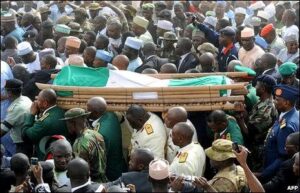
Yar’Adua’s death remains a defining memory because it exposed two things at once. One was personal: a leader who served while gravely ill, and a family that tried to shield him from public view. The other was institutional: a constitution that had no clear process for presidential incapacitation, and a political class that delayed action until the crisis forced its hand.
Today he is remembered differently depending on who you ask. To some, he was a sincere, humble leader whose health denied Nigeria his best years. To others, his long absence is a lesson on why medical fitness and transparency must be non-negotiable for those seeking the highest office…See More




Leave a Reply