
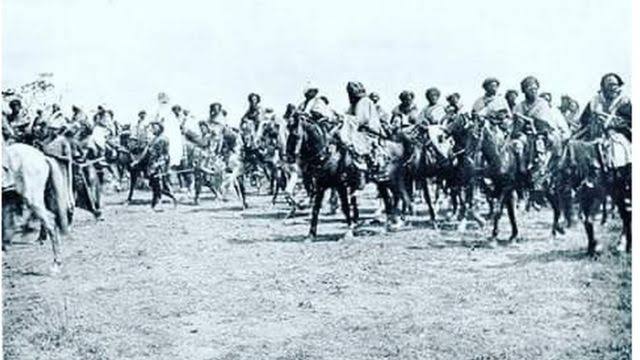
In 1840, the town of Osogbo became the frontline for the survival of Yorubaland. What is remembered as the Battle of Osogbo was not a single clash, but a crisis that played out in waves, and it marked the moment Ibadan rose from a military town to the dominant power in southwestern Nigeria.
By the 1830s and 1840s, the Old Oyo Empire had collapsed. Internal conflict, most notably the rebellion of Afonja in Ilorin, had opened the door for Fulani and Hausa forces based in Ilorin to push south. Ilorin, once an Oyo provincial capital, was now operating under the influence of the Sokoto Caliphate and fielding a powerful cavalry.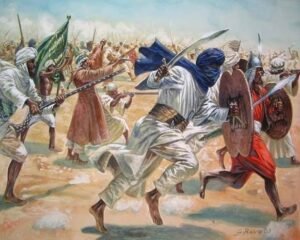
With no central Oyo army to stop them, Ilorin forces began raiding Yoruba towns. Osogbo, under the Ataoja, found itself directly in the path. The town sent an urgent distress call to Ibadan, which by then was already building a reputation as a refuge for warriors and displaced people.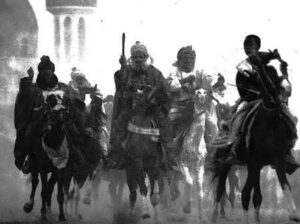
Ibadan’s first response was an auxiliary force led by Obele, also called Mobitan, and Alade Abimpagun. They moved to relieve Osogbo but were heavily outnumbered. Faced with Ilorin cavalry backed by Sahelian mercenaries and Sokoto logistics, they were forced into retreat.
A second, more experienced detachment was sent quickly. It met the same problem. The Ilorin army had better horses, longer supply lines, and momentum. They pushed further around Osogbo and tightened the siege. To outside observers, it looked like Osogbo would fall, and with it, a path into the Yoruba heartland would open.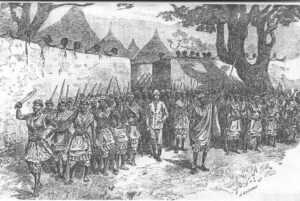
When Balogun Oderinlo arrived with the main Ibadan army, he rejected a direct daylight confrontation. In open field, Ilorin cavalry had the advantage. So he changed the rules.
During the day his forces held back, giving the impression of hesitation. At night, he struck. Horses are poor in darkness and in thick brush, and Oderinlo knew it.
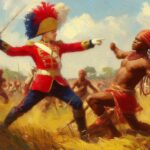
Ibadan infantry slipped into the Ilorin camp and set tents on fire. As confusion spread, they opened fire with European rifles and gunpowder. The noise and flames panicked the cavalry horses, which broke lines and trampled their own men. In the chaos, Ibadan troops captured several senior Ilorin war chiefs alive. The Ilorin command structure collapsed, and the siege of Osogbo was broken.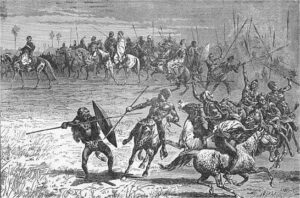
The victory in 1840 did more than save one town. It stopped the southern advance of Ilorin forces and drew a line that largely held for the rest of the century. Osogbo survived, and Yoruba towns to the south were spared immediate invasion.
Politically, the war completed a shift that had started with Oyo’s collapse. With the old royal system weakened, Ibadan built a new model: a republic based on military merit. Titles like Balogun were earned on the battlefield, not by birth. Any capable hunter or strategist could rise. That system made Ibadan highly organized and aggressive, and for the next several decades it dominated trade, diplomacy, and warfare across southwestern Nigeria.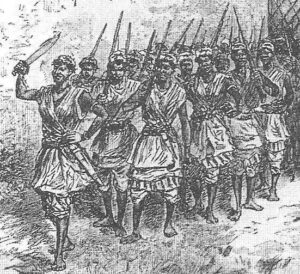
The Battle of Osogbo is rarely taught in detail, but it explains a lot about 19th century Yorubaland. It shows how the vacuum left by Oyo was filled, not by a king, but by a military state. It also shows how tactics, not just weapons, decided wars. Cavalry ruled the day, but infantry, fire, and night fighting won the night.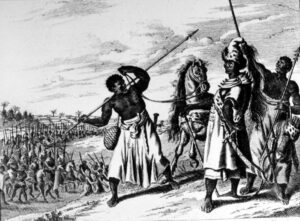
For Osogbo, the day was deliverance. For Ibadan, it was validation. And for Yorubaland, it was the battle that kept the Fulani invasion from moving further south…See_More


Leave a Reply