
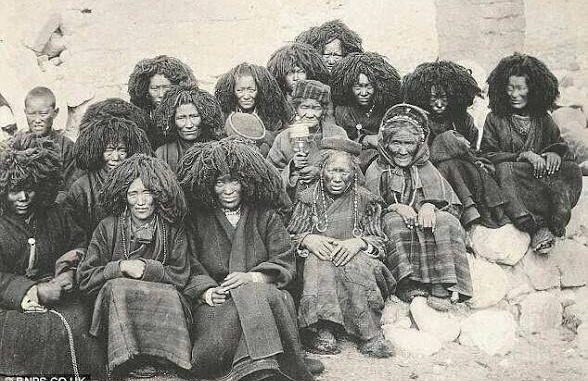
Some history claim that ancient China was founded by African people, and that evidence of a Black presence in the Shang, Zhou, and Han dynasties was later erased. The story is popular because it connects distant cultures and challenges the way history is usually told. To understand it fairly, we have to separate the claims from what archaeologists, geneticists, and historians have actually found.
The Claim About Origins and Migration
The documentary argument goes like this: early African migrations reached China around 2000 BC and brought culture, bloodlines, and technology. It links this to the Out of Africa theory, which says all modern humans descend from African ancestors.
What science shows is different in timing. Genetic studies, including large projects led by researchers like Jin Li, do confirm that the ancestors of modern East Asians left Africa. But that migration happened roughly 60,000 to 70,000 years ago. By 2000 BC, populations in East Asia had been living in the region for tens of thousands of years and were genetically distinct. There are no verified archaeological sites, burials, or fossils from 2000 BC in China that show a recent African population. The gap between ancient human origins and the Bronze Age is too large to collapse without evidence.
The Shang Dynasty and Oracle Bones
The video points to Shang art and oracle bone carvings as proof, arguing that broad noses and textured hair show African ancestry. The Shang, from about 1600 to 1046 BC, left behind bronze vessels, city ruins at Yinxu, and thousands of oracle bones used for divination.
Archaeologists have excavated Shang burials and tested DNA from human remains. The results place Shang people within East Asian genetic lineages that are ancestral to modern Chinese populations. Oracle bone characters are pictographs, not portraits. Stylized faces, hair, and features vary because of artistic convention and regional craftsmanship, not because they are anatomical photographs. Within any large ancient population there is natural physical diversity, and that alone does not indicate a separate continental origin.
Zhou, Han, and the Idea of Erasure
Another claim is that later dynasties deliberately erased African presence to create a homogeneous Han identity.
The period from Zhou to Han, roughly 1046 BC to 220 AD, is one of the best documented eras in early world history. We have bronze inscriptions, bamboo and silk texts, and the historical record of Sima Qian’s Shiji.
Mainstream historians do not find evidence of an African population in the core of early China that would need to be erased. The Han identity was political and cultural. It brought together many local kingdoms and tribes in the Yellow River and Yangtze regions under one imperial system. The argument for erasure runs into a basic problem: to erase something, it first has to be documented, and there is no contemporary record of such a population in the central plains during this time.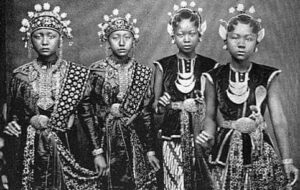
Trade and the Tang Dynasty
Here the documentary gets something right. During the Tang Dynasty, from 618 to 907 AD, Chinese ports like Guangzhou were part of the Indian Ocean trade network. Chinese records mention Kunlun people, a broad term used for dark-skinned traders and sailors from Southeast Asia, South Asia, and East Africa. Ivory, spices, and incense came in. Chinese silk and porcelain went out.
That contact was real, but it was commerce, not evidence that early Chinese civilization was founded by Africans. It shows medieval globalization, similar to how Arab, Persian, and Indian merchants were also in Tang cities.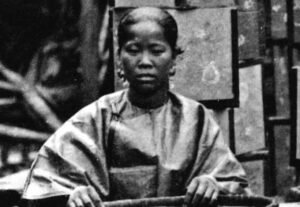
Mainstream archaeology traces Chinese civilization to indigenous Neolithic cultures like Yangshao and Longshan along the Yellow and Yangtze rivers. Farming, pottery, and social organization developed locally over thousands of years. Later, China had extensive contact with the outside world through the Silk Road and sea trade, and that brought people, ideas, and goods from Africa, India, and the Middle East.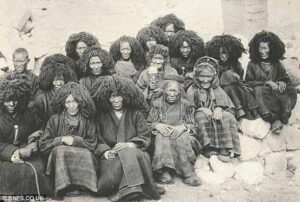
It shows how people are searching for connections and for a place in world history that textbooks often skip.
Real history is already complex enough. China traded with Africa, hosted African visitors, and influenced and was influenced by other civilizations. The task is to tell that story with evidence, not to invent one. When we do, we get a richer picture: not a forbidden secret, but a real network of exchange that linked continents long before modern maps existed…See_More




Leave a Reply