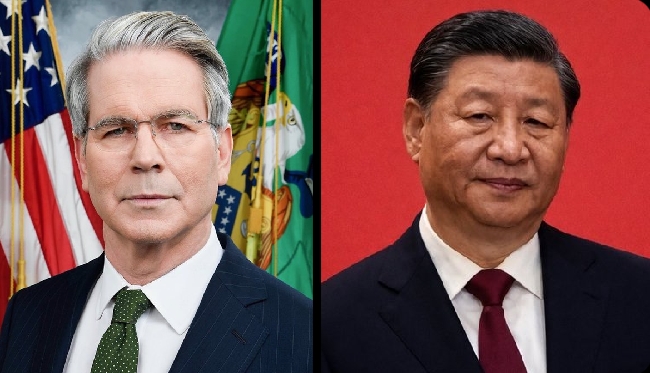
United States Treasury Secretary Scott Bessent has declared that China will no longer have access to Iranian oil following a US-enforced blockade in the Strait of Hormuz. The statement comes as tensions between the US, Israel, and Iran continue to escalate, disrupting approximately 20% of global oil flows through one of the world’s most critical maritime chokepoints.
Bessent’s announcement signals a major shift in global energy dynamics, particularly affecting China, which currently purchases over 90% of Iran’s total oil output.
The Treasury Secretary did not hold back in his criticism of China, describing the country as an unreliable partner in global energy markets.
According to Bessent, China has been hoarding oil reserves while simultaneously limiting its own exports, a practice he characterized as economically destabilizing. His remarks suggest that the US intends to leverage the current geopolitical crisis to reshape oil trade routes and punish what Washington views as Beijing’s exploitation of Iranian sanctions violations.
The blockade in the Strait of Hormuz represents one of the most aggressive moves by the United States in recent years to control global energy flows. The strait is a narrow passage between Iran and Oman through which roughly one-fifth of the world’s oil supply passes daily.
By enforcing a blockade in this critical waterway, the US is effectively attempting to strangle Iran’s ability to export petroleum while simultaneously cutting off China’s primary source of discounted crude. Bessent indicated that the blockade is part of broader measures related to the ongoing US-Israel-Iran conflict, though he did not provide specific details about military operations or the duration of the enforcement.
Despite the blockade announcement, Bessent revealed that the US government has granted temporary sanctions relief on stranded Iranian crude. This relief is designed to redirect oil that would have gone to China toward American allies instead.
The move appears calculated to prevent a complete collapse in global oil markets while still punishing Beijing for what Washington considers economic opportunism. The Treasury Secretary did not name which specific countries would benefit from this redirected supply, but the implication is that traditional US partners in Europe and Asia will receive priority access.
“China has proven to be an unreliable partner, buying up Iranian oil in violation of international sanctions while hoarding domestic supplies and restricting exports,” Bessent stated during his announcement. He added that Beijing’s actions have created artificial market distortions that harm global economic stability.
The Treasury Secretary emphasized that the current enforcement actions are meant to restore balance to energy markets and hold accountable nations that circumvent established international frameworks.
The backdrop to Bessent’s declaration is a longstanding pattern of Chinese purchases of Iranian crude despite US sanctions. For years, China has served as Iran’s economic lifeline, buying oil at heavily discounted rates and providing Tehran with crucial foreign currency. This relationship has frustrated American policymakers who view it as undermining their maximum pressure campaign against the Iranian regime. By purchasing over 90% of Iran’s oil exports, China has effectively neutralized much of the intended economic impact of US sanctions, allowing Iran to continue funding its regional activities and nuclear program….See More


Leave a Reply