China’s Foreign Ministry has labeled the United States naval blockade of Iranian ports in the Strait of Hormuz as “dangerous and irresponsible,” warning that it risks escalating tensions and undermining what remains of a fragile ceasefire between Washington and Tehran.
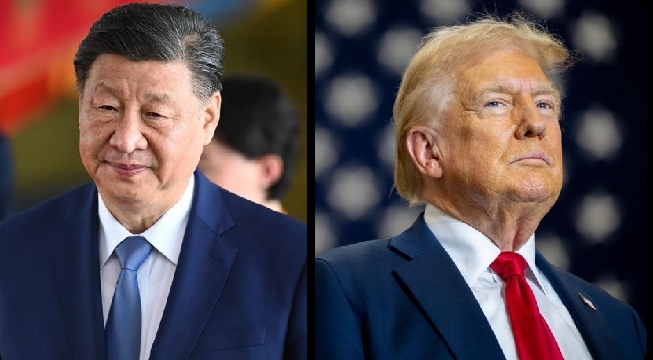
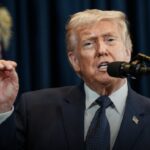
The statement, reported by BRICS News and accompanied by images of Chinese President Xi Jinping and US President Donald Trump, frames the blockade as a unilateral action that threatens global energy security, violates principles of freedom of navigation, and places the world’s most critical maritime chokepoint under the control of a single nation pursuing its own strategic interests without regard for the broader consequences.
The Strait of Hormuz carries approximately twenty percent of global oil and liquefied natural gas, making it one of the most strategically important waterways in the world. Any disruption to shipping through the Strait affects energy prices, supply chains, and the economic stability of nations across every continent. China, as Iran’s top oil buyer and one of the world’s largest energy consumers, has a direct interest in ensuring that the Strait remains open and that commercial shipping can transit without interference, threats, or the risk of being caught in a military confrontation between the US and Iran.
Beijing’s characterisation of the blockade as dangerous reflects the assessment that the presence of US naval forces enforcing a cordon around Iranian ports increases the likelihood of incidents, miscalculations, or confrontations that could escalate into broader conflict. The Strait is narrow, heavily trafficked, and militarised, with naval forces from multiple countries operating in close proximity.
The addition of a blockade that requires US ships to intercept, board, or turn back vessels suspected of trading with Iran creates multiple points of potential friction, particularly when those vessels are flagged by countries that do not recognise the legitimacy of the blockade and are prepared to contest it.
The reference to undermining a fragile ceasefire suggests that China views the blockade as incompatible with the stated goal of de-escalation and negotiation. A ceasefire, by definition, is a pause in hostilities designed to create space for dialogue and the resolution of disputes through means other than force.
A naval blockade is an act of war, a tool of economic strangulation designed to compel surrender or regime change. The two are fundamentally incompatible, and China’s statement is an assertion that the US cannot claim to be pursuing peace while simultaneously tightening a noose around Iran’s economy and threatening to sink any ship that attempts to break it.
China has urged diplomacy and a full ceasefire to restore safe navigation, a position that reflects both its economic interests and its broader strategic opposition to US unilateralism. Beijing has consistently argued that international disputes should be resolved through dialogue, multilateral frameworks, and respect for sovereignty rather than through military force or coercive measures imposed by powerful states on weaker ones.
The blockade, from China’s perspective, is an example of American power being used to dictate terms, control critical infrastructure, and punish nations that refuse to comply with Washington’s demands.
Reports indicate that some Chinese and Iran-linked tankers have continued transiting the Strait despite the blockade, a sign that China is not complying with US demands and is testing whether the US is willing to intercept or attack vessels flagged by or associated with a country that has the military and economic capacity to respond.
If the US stops a Chinese tanker, boards it, or prevents it from reaching an Iranian port, the confrontation moves from rhetorical to physical, and the risks of escalation increase exponentially…See More



Leave a Reply