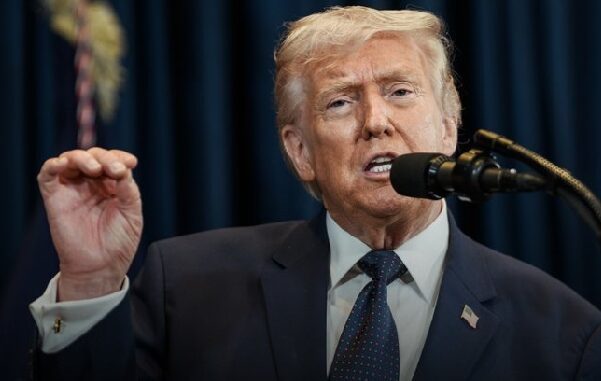
President Donald Trump has warned that remaining Iranian “fast attack ships” approaching the US naval blockade will be immediately eliminated using the same rapid tactics applied to drug smuggling boats at sea, a statement that frames Iranian naval vessels as criminal threats rather than military assets and signals that the rules of engagement for the blockade include shoot-on-sight orders for any Iranian craft that attempts to challenge or breach the cordon.
The warning, issued through official White House channels, follows the failure of US-Iran ceasefire talks in Pakistan and comes as the blockade of Iranian ports and traffic in the Strait of Hormuz entered its first full day on April 13, 2026, after prior US military actions reportedly destroyed one hundred and fifty-eight Iranian vessels in strikes that preceded the formal blockade order.
The comparison to drug smuggling boats is deliberate and loaded. Drug interdiction operations at sea typically involve the use of overwhelming force to stop, disable, or destroy vessels that refuse to halt or that attempt to flee. The tactics include warning shots, disabling fire, and if necessary, sinking the vessel to prevent escape or the completion of its mission.
By stating that Iranian fast attack boats will be treated the same way, Trump is signaling that the US Navy will not negotiate, will not allow Iranian vessels to approach the blockade perimeter, and will destroy them before they can launch attacks, deploy mines, or create incidents that could escalate the confrontation.
The claim that one hundred and fifty-eight Iranian vessels have already been destroyed is extraordinary if accurate. That figure represents a significant portion of Iran’s naval capacity, particularly its fleet of small, fast, and heavily armed boats that the Islamic Revolutionary Guard Corps Navy uses for asymmetric warfare in the Persian Gulf. These boats are designed to operate in swarms, using speed, numbers, and surprise to overwhelm larger and more heavily armed adversaries. They carry missiles, torpedoes, and machine guns, and they are trained to conduct suicide attacks if necessary. If the US has indeed destroyed one hundred and fifty-eight of them, it represents a devastating blow to Iran’s ability to contest the blockade or defend its coastline.
The blockade itself is structured to allow non-Iranian traffic through the Strait of Hormuz while preventing all maritime access to Iranian ports. That distinction is important because it suggests that the US is not attempting to close the Strait entirely, which would disrupt global oil supply and bring it into conflict with every nation that depends on Gulf energy. Instead, the blockade targets Iran specifically, allowing other countries to continue shipping oil, goods, and materials through the waterway as long as they are not trading with Iran or entering Iranian territorial waters.
The practical challenge is enforcement. The Strait of Hormuz is one of the busiest shipping lanes in the world, with dozens of vessels transiting daily. Determining which ships are bound for Iranian ports, which are simply passing through, and which might be carrying contraband or conducting covert trade with Iran requires surveillance, boarding, inspection, and the willingness to use force against vessels that do not comply. The US Navy has the capacity to conduct those operations, but the scale and duration required to maintain an effective blockade over weeks or months will strain resources and create opportunities for incidents, mistakes, or confrontations with ships from countries that do not recognise the legitimacy of the blockade…See More






Leave a Reply