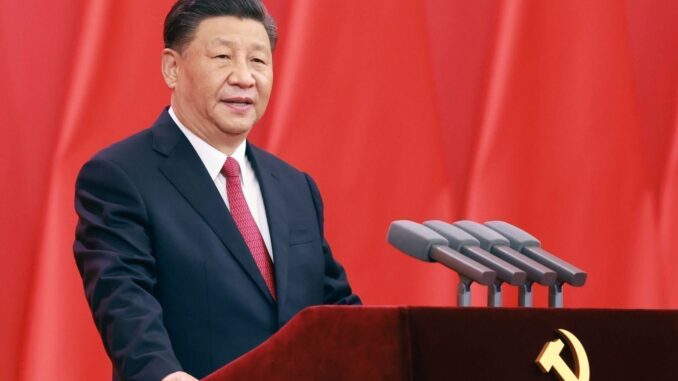
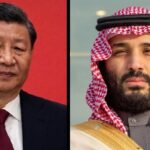
Chinese President Xi Jinping has called for respect of Iran’s sovereignty and territorial integrity during a high-level meeting with United Arab Emirates Crown Prince Mohammed bin Zayed on April 14, 2026, as the Middle East grapples with a fragile ceasefire following months of escalating conflict.
The statement came amid ongoing US-Israeli military operations against Iran that began in February 2026 and the American naval blockade of Iranian ports in the Strait of Hormuz that has strangled Tehran’s maritime trade.
Xi’s remarks represent Beijing’s most direct diplomatic intervention in the crisis and signal China’s determination to play a major role in Middle Eastern affairs at a time when American military actions have brought the region to the brink of wider war.
The meeting between Xi and the UAE Crown Prince took place against the backdrop of an extremely volatile regional situation. US and Israeli forces have conducted extensive strikes on Iranian territory over the past two months, targeting military installations, nuclear facilities, and infrastructure in what Washington and Tel Aviv characterize as necessary defensive actions against Iranian aggression and nuclear weapons development.
Iran has responded with missile and drone attacks on Israeli and American assets in the region, though a tenuous ceasefire has been in place for several days. The American naval blockade of the Strait of Hormuz, enforced by the USS Abraham Lincoln carrier strike group and supporting vessels, has effectively cut Iran off from maritime trade and caused global energy markets to gyrate wildly.
Xi’s statement on Iranian sovereignty was embedded within a broader four-point proposal for regional stability that Beijing presented during the meeting with UAE leadership. According to reports from BRICSinfo, which has been closely covering the geopolitical dimensions of the Middle East crisis, the Chinese proposal emphasizes principles of non-interference in sovereign nations’ internal affairs, regional stability and security, protection of critical infrastructure including energy facilities, and diplomatic resolution of conflicts through dialogue rather than military force.
These principles align closely with China’s long-standing foreign policy positions but take on particular significance given the current crisis and China’s deepening involvement in Middle Eastern politics and economics.
The timing and location of Xi’s statement carry significant diplomatic weight. By making these remarks directly to the UAE Crown Prince, Xi was speaking to a leader whose country is simultaneously a close American security partner and an increasingly important Chinese economic partner.
The UAE hosts American military bases and has defense agreements with Washington, but it has also become a major destination for Chinese investment and a key node in China’s Belt and Road Initiative.
The UAE’s position as a major energy producer and its geographic location on the opposite shore of the Strait of Hormuz from Iran give it particular relevance to the current crisis, as Emirati oil exports depend on the same waterway that American forces are now blockading to prevent Iranian maritime trade.
China’s relationship with Iran has grown substantially closer over the past decade, particularly since the two countries signed a comprehensive strategic partnership agreement in 2021.
China is Iran’s largest trading partner and oil customer, purchasing the majority of Iranian crude exports despite American sanctions intended to prevent such transactions. Chinese companies have invested in Iranian infrastructure, energy projects, and technology sectors. This deepening economic relationship has been accompanied by closer diplomatic coordination, with China consistently opposing American sanctions on Iran and supporting Tehran’s positions in international forums. Xi’s statement on sovereignty and territorial integrity reflects this partnership while also serving China’s broader strategic interests in the Middle East.
However, China’s relationship with Gulf Arab states, including the UAE, Saudi Arabia, and others, has also expanded dramatically in recent years.
Chinese companies have invested hundreds of billions of dollars in Gulf economies, particularly in energy, infrastructure, and technology sectors. China has become the largest trading partner for most Gulf states, surpassing even the United States in commercial importance for the region….See More

Leave a Reply