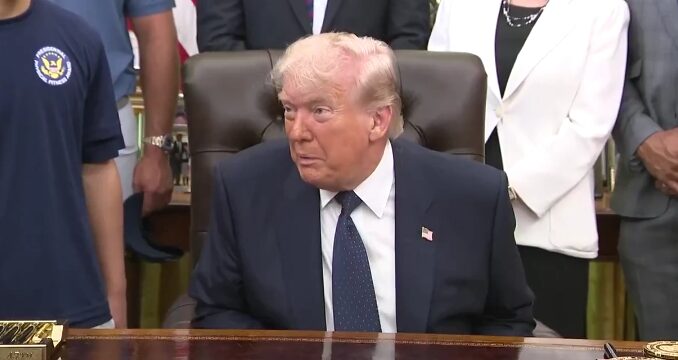
A video shared by BRICSinfo shows US President Donald Trump saying Iran should “wave the white flag of surrender,” claiming the United States has “beaten them very badly” amid heightened tensions in the Middle East.
The clip is circulating widely online as reports point to recent direct clashes between the two countries and disruptions in the Strait of Hormuz.
In the video, Trump asserts that US actions have significantly weakened Iran’s military capabilities, reducing its forces to what he described as “basic naval assets.” He also suggests that Iranian pride is preventing Tehran from accepting what he framed as a clear defeat.
The remarks come against the backdrop of reports of direct US-Iran confrontations and maritime instability in the Strait of Hormuz, a critical global oil transit route.
Although a fragile ceasefire is said to be holding, tensions remain high, with both sides engaging in sharp rhetoric.
BRICSinfo, a geopolitics-focused account that tracks developments involving BRICS nations and global power shifts, posted the clip as part of ongoing coverage of Middle East dynamics.
The framing underscores the broader geopolitical stakes, particularly as Iran maintains strategic ties with countries aligned outside the Western bloc.
In the video, Trump states, “They should wave the white flag of surrender,” adding that the US has “beaten them very badly.”
He argues that despite the alleged military setbacks, Iran’s leadership is unwilling to publicly concede due to national pride.
The comments have sparked intense debate online. Some users interpret Trump’s statement as part of a pressure tactic designed to strengthen the US negotiating position in any potential talks.
Others question whether Iran’s regional proxy networks and long-term resilience under sanctions suggest a more complex reality.
For years, Iran has operated under extensive US sanctions targeting its energy exports, financial institutions and military sectors.
Despite economic strain, Tehran has continued to project influence through regional alliances and non-state actors. Analysts often note that sanctions can weaken formal economic structures without necessarily eliminating strategic capabilities.
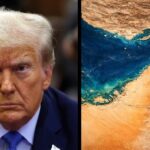
The Strait of Hormuz remains a focal point in the standoff. Any disruption to shipping in the narrow waterway has immediate implications for global oil markets, making stability in the area a matter of international concern.
As diplomatic efforts and military posturing unfold simultaneously, Trump’s remarks highlight the continuing use of public messaging as a negotiation tool.
Whether the rhetoric signals escalation or an attempt to force concessions remains unclear….See More

Leave a Reply