Iran cannot fully reopen the Strait of Hormuz because it cannot locate or clear all the naval mines that were deployed by the Islamic Revolutionary Guard Corps during the 2026 crisis, according to US officials cited in a New York Times report shared by BRICSinfo.
The revelation adds a new and unexpected dimension to the ceasefire negotiations between the United States and Iran, where one of the primary American demands has been the reopening of the Strait to commercial shipping.
The problem is that even if Iran wanted to comply fully with that demand, it may lack the capability to do so safely because the mining operation was conducted hastily, without adequate documentation of mine locations, and Iran’s mine-clearing capacity is limited compared to the scale of the problem it has created.
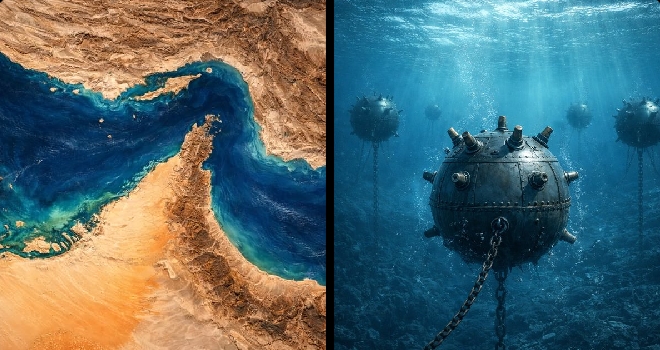
The Strait of Hormuz is a narrow waterway that carries approximately twenty percent of the world’s seaborne oil, making it one of the most strategically important chokepoints in global energy infrastructure.
Iran’s decision to mine the Strait was a defensive and asymmetric response to US and Israeli military pressure, designed to deny or complicate passage for adversary naval forces and to impose costs on any attempt to force the waterway open.
The strategy worked in the sense that it closed the Strait and forced a crisis, but it has also created a problem that Iran cannot easily solve. Naval mines, once deployed, do not have expiration dates, GPS trackers, or self-destruct mechanisms unless specifically designed with those features.
If the IRGC deployed mines without recording their exact locations or without using technology that allows them to be remotely deactivated or located, those mines remain in place, drifting with currents or sitting on the seabed, and they pose a threat to any vessel, Iranian or otherwise, that attempts to transit the Strait.
The haphazard nature of the mining operation, as described by US officials, suggests that the IRGC prioritised speed and coverage over precision and post-conflict management. That choice was rational in the context of an escalating war where the immediate goal was to block the Strait and deter adversaries. But it has left Iran in a position where it cannot deliver on a key demand of the ceasefire, reopening the Strait, without risking the very ships and personnel it would need to conduct mine-clearing operations.
The irony is that Iran’s success in closing the Strait has become a barrier to its own ability to negotiate an end to the conflict on terms that require the Strait to reopen…See More






Leave a Reply