China’s Ministry of Commerce has invoked its 2021 Blocking Rules for the first time, directing Chinese firms to disregard US sanctions imposed on five domestic refineries over their purchases of Iranian crude oil.
The move marks a significant escalation in the ongoing dispute between Washington and Beijing over sanctions enforcement and global energy trade.
The US sanctions target Hengli Petrochemical and four smaller independent “teapot” refineries, accusing them of purchasing Iranian oil in violation of American restrictions.
In response, Beijing has formally ordered companies not to comply with what it considers extraterritorial measures that undermine China’s sovereignty and commercial interests.
The 2021 Blocking Rules were introduced by China to counter foreign laws and sanctions that it deems unjustified or improperly applied to Chinese entities.
By activating the framework, the Ministry of Commerce is effectively telling affected companies to continue their dealings and report any losses resulting from compliance with US sanctions.
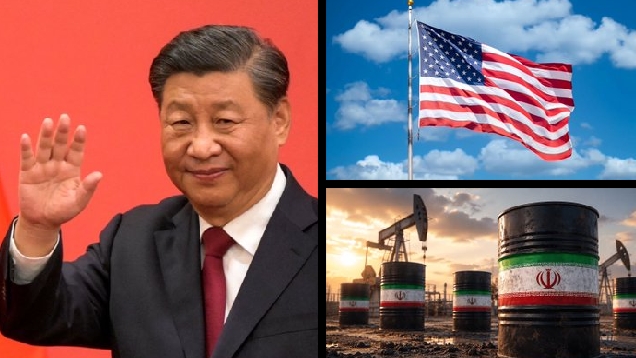
Images accompanying the post show Chinese President Xi Jinping, the US flag and Iranian oil barrels alongside pump jacks, visually framing the development as a direct geopolitical confrontation.
The symbolism underscores the broader stakes, with energy security and strategic rivalry at the centre of the dispute.
China remains the largest buyer of Iranian crude, often purchasing discounted barrels that provide a cost advantage for its refiners.
Much of this oil flows to independent refiners known as “teapots,” which play a significant role in China’s domestic fuel market. Despite US efforts to tighten enforcement, trade between China and Iran has continued through various channels.
Washington’s sanctions are part of a broader strategy to pressure Tehran by limiting its oil revenue. However, analysts have long noted that enforcement becomes more complicated when major economies decline to cooperate.
China’s formal invocation of its Blocking Rules highlights the limits of US sanctions when they lack broad international backing.
The development comes at a sensitive time in China-US relations, with high-level diplomatic engagements reportedly being discussed.
Energy trade and sanctions policy remain key friction points in the bilateral relationship, alongside technology restrictions and security issues….See More



Leave a Reply