Dark History: The World Cup Is Over, But Here Is An Unbelievable Tragedy That Occurred Years Ago – How Zambia Lost Its Entire Football Team In The Name Of Football
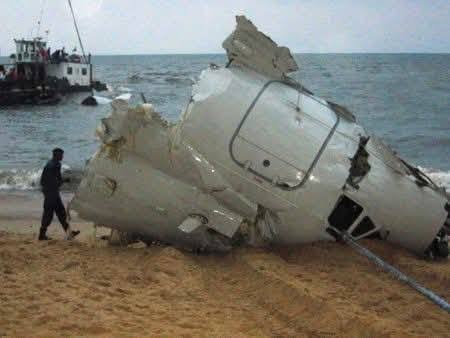
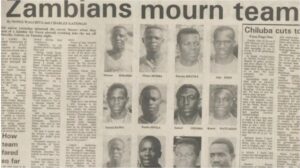
April 27, 1993, is a date Zambians will never forget. On that day, a Zambian Air Force plane carrying the entire national football team crashed into the Atlantic Ocean off the coast of Gabon. All 30 people on board died.
The team was traveling to play a 1994 FIFA World Cup qualifier. In one moment, a generation of footballers was lost. The disaster remains one of the darkest moments in African sports history.
The team was nicknamed the Chipolopolo, the Copper Bullets. They were on their way to Dakar, Senegal, for a World Cup qualifying match.
The flight plan included scheduled refueling stops. The Zambian Air Force Buffalo DHC-5D took off from Lusaka, stopped in Brazzaville, Congo, then in Libreville, Gabon. It was after takeoff from Libreville that disaster struck.
According to the official investigation, one of the aircraft’s engines caught fire shortly after departure. In an attempt to handle the emergency, the pilot shut down an engine. He mistakenly shut down the working engine instead of the one that was on fire. With no power, the plane lost altitude immediately and nosedived into the ocean, just minutes after leaving the runway.
All 30 people on board perished. The victims included 18 players, four members of the coaching and medical staff, one journalist, and the flight crew.
This was not just a team. It was Zambia’s golden generation. Many of the players were considered the best the country had ever produced. They had played together for years and were leading Zambia’s push to qualify for its first World Cup.
The loss was total. A country that lived for football woke up to news that its heroes were gone.
A few key players survived only because they were not on that flight. They were playing for clubs in Europe and were scheduled to join the team later in Dakar.
The most notable survivor was team captain Kalusha Bwalya. He was in the Netherlands at the time with PSV Eindhoven. Bwalya would later become the face of Zambia’s recovery. He returned to captain a rebuilt team and later served as president of the Football Association of Zambia.
Others who missed the flight also played critical roles in what came next. Their absence that day was the difference between life and death.
The crash investigation revealed serious problems beyond pilot error.
Reports stated that the aircraft had been out of service for five months before the trip. Test flights conducted prior to the journey had already flagged engine defects and cable issues. The plane was old, and maintenance standards were questioned.
The combination of mechanical problems and human error created the conditions for the tragedy. For Zambia, it was not just grief. It was anger that the team had been sent in an aircraft that should not have been flying.
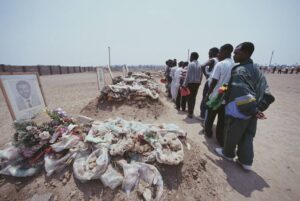
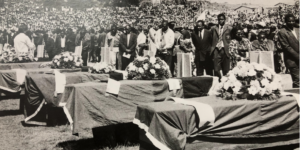
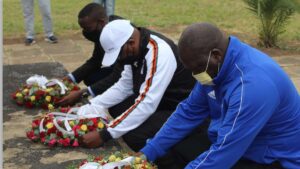
The fallen players were given a state funeral and laid to rest at Hero’s Acre in Lusaka. The nation mourned for weeks. Stadiums held memorials. Schools and communities named teams after the lost players.
In May 2022, almost 30 years later, the Zambian government released compensation funds to the families of the victims. For many families, it was a step toward closure.
But the most remarkable part of the story came on the pitch. Just one year later, a newly assembled Zambian team, made up of local players and the few survivors, reached the final of the 1994 Africa Cup of Nations. They lost to Nigeria, but their run was seen as a miracle. They played for the men who died.
That team carried the name Chipolopolo forward. In 2012, Zambia won the Africa Cup of Nations in Libreville, Gabon, less than a mile from where the plane crashed. Many players and fans described it as destiny and as a tribute.
The 1993 crash changed how African countries approached team travel. It also changed how Zambia understood football. It was no longer just a game. It was memory.
Kalusha Bwalya’s leadership after the tragedy ensured that the team was rebuilt with dignity. New players were told the names of the 18 who died. Their photos hang in training centers. Every year on April 27, Zambia holds remembrance services.
The tragedy also became a lesson in resilience. To lose an entire national team and still compete at the highest level one year later is almost unbelievable. Yet Zambia did it.
C L I C K T O S E E V I D E O…..
The World Cup will come and go. But some stories stay. On April 27, 1993, Zambia lost 18 players, coaches, and staff in the Atlantic Ocean because of an engine fire and a fatal mistake.
The Chipolopolo died in the name of football, traveling to represent their country. From that loss came a new team, a new purpose, and eventually, an Africa Cup of Nations title.
The names of the 1993 team are read every year in Lusaka. They remind Zambia, and Africa, that football is more than results. Sometimes it is about remembering those who never made it to the final whistle…See_More











Leave a Reply