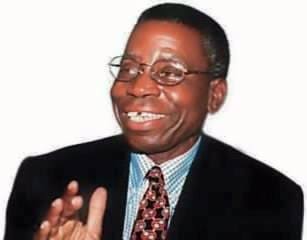
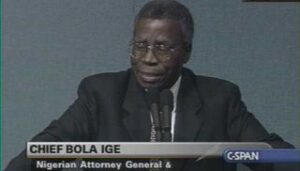
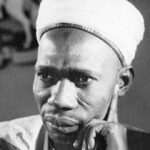
December 23, 2001, remains one of the most painful dates in Nigeria’s democratic history. On that night, Chief Bola Ige, the country’s Attorney General and Minister of Justice, was assassinated in his Ibadan home. He was a senior member of the federal cabinet, a respected lawyer, and a prominent voice in the South West. Twenty-five years later, the murder is still unsolved. The case exposed deep cracks in Nigeria’s political system and raised questions about security, power, and accountability that the country is still trying to answer.
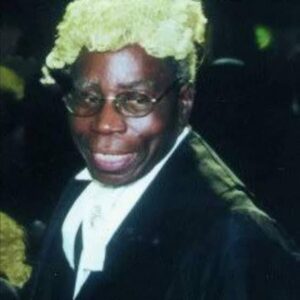
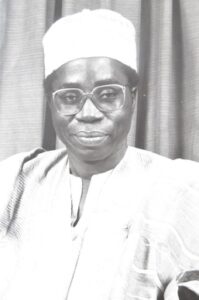
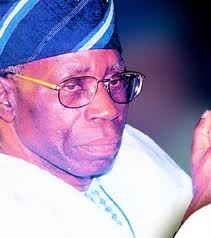
Chief Bola Ige was a lawyer, former Governor of Old Oyo State, and a leading figure in the Alliance for Democracy. In 1999, he was appointed Minister of Justice and Attorney General of the Federation under President Olusegun Obasanjo. He was known for his sharp legal mind, his advocacy for federalism, and his willingness to speak plainly.
By 2001, tensions were high in Osun and Oyo politics. Party rivalries, control of local government, and influence in the South West had created a volatile environment. Ige was at the center of many of those debates.
December 21, 2001: Two days before his death, Ige attended a function at the palace of the Ooni of Ife. There was a confrontation. Witnesses said supporters of the then Osun State Deputy Governor, Iyiola Omisore, harassed Ige and removed his cap. The incident was widely reported and increased political tension in the region.
December 23, 2001: At about 8:00 PM, armed men entered Ige’s residence in the Bodija area of Ibadan. Reports stated that his police security detail was not on the premises at the time. The gunmen shot Ige at close range inside his home. He was rushed to University College Hospital, Ibadan, where he was pronounced dead on arrival.
The killing of a sitting Minister of Justice in his own house sent shockwaves across Nigeria and abroad.
The police launched a nationwide investigation. Within weeks, 11 people were arrested in connection with the murder. Those charged included Iyiola Omisore and a man identified in reports as Papa Fryo, a local figure who initially made a confession that was later contested.
The trial began in 2002 and stretched into 2003. It became one of the most watched cases in the country. However, problems emerged. Prosecutors said critical evidence went missing. Some key witnesses could not be located. There were allegations of interference and witness intimidation.
In 2004, an Oyo State High Court delivered judgment. The court ruled that the evidence presented was insufficient to link the accused to the murder. All 11 defendants, including Omisore, were acquitted and discharged. The state did not secure a conviction.
The acquittal did not end the controversy. It deepened it.
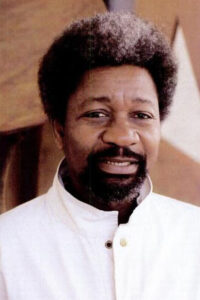
Nobel laureate Wole Soyinka publicly described the political environment around the killing as a “nest of killers.” He and other commentators alleged that the murder reflected state-level coordination and a culture of impunity in politics.
For the Obasanjo administration, it was a major embarrassment. A Minister of Justice had been killed and the state could not produce a conviction. For the South West, it deepened mistrust and hardened political rivalries that had been building for years.
Civil society groups, legal associations, and the Ige family continued to call for a fresh investigation. To date, no one has been convicted for the crime.
First, how were the gunmen able to access a minister’s residence without effective security present.
Second, what happened to the evidence and witnesses that disappeared during the trial.
Third, what was the full context of the palace incident two days earlier and did it have any connection to the killing.
Public debate has consistently pointed toward high-level political corruption and rivalries as the backdrop. But without new evidence, the case remains officially unsolved. It is now regarded as one of Nigeria’s most high-profile political assassinations.
Bola Ige is remembered as a principled lawyer and politician who spoke for restructuring and the rule of law. Streets, institutions, and lecture series have been named after him. His death became a reference point in discussions about political violence in Nigeria’s Fourth Republic.
The case also forced conversations about witness protection, evidence handling, and the independence of prosecutions. Many of the problems that affected the Ige trial are still raised today in other high-profile cases.
Chief Bola Ige was killed on December 23, 2001, in circumstances that suggested a targeted attack. The state arrested suspects, took the case to court, and lost it due to missing evidence and unavailable witnesses.
Twenty-five years on, the murder remains unsolved. It stands as a reminder of how political competition, weak institutions, and insecurity can combine with deadly consequences. For many Nigerians, the search for justice in the Bola Ige case is not just about one man. It is about whether the country can hold power to account…See_More




Leave a Reply