
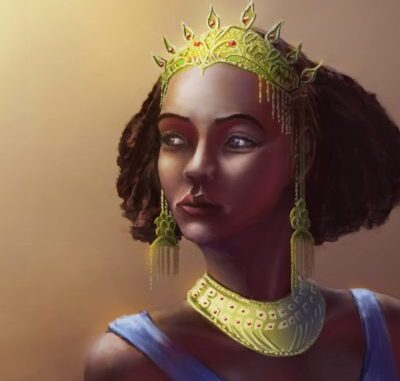
Many people assume Africa is rarely mentioned in the Bible. Yet one of the most famous encounters in Scripture involves an African monarch.
Known in tradition as Malikat Saba, the Queen of Sheba traveled to meet King Solomon of Israel. According to 1 Kings 10 and 2 Chronicles 9, she came with a large caravan carrying spices, precious stones, and gold.
Her purpose was not only trade. She came to test Solomon’s renowned wisdom with difficult questions. The biblical account says he answered everything to her satisfaction. Impressed, she praised God for giving Israel such a wise king and gave him further gifts before returning to her land.
The kingdom of Sheba is generally identified with a wealthy ancient civilization in the Horn of Africa and southern Arabia. Most scholars associate it with the region of present-day Ethiopia and Yemen. Ethiopian tradition holds that Sheba was centered in Ethiopia, a view reflected in the national epic _Kebra Nagast_.
The Bible describes Sheba as extremely wealthy, with trade in gold, spices, and other luxury goods that made it influential in the ancient world.
Beyond the biblical text, Ethiopian tradition tells a different chapter. According to the _Kebra Nagast_, the queen’s visit led to the birth of a son, Menelik I, who later became king of Ethiopia and established the Solomonic dynasty. The Bible itself does not record a child or a romantic relationship, ending the story with the queen’s departure after Solomon granted her requests.
The account places an African queen at the center of a major biblical narrative: wealthy, politically independent, intellectually curious, and treated with honor by one of Israel’s most famous kings. Whether read as history, theology, or tradition, the story has shaped religious and cultural identity for centuries, especially in Ethiopia…See More



Leave a Reply