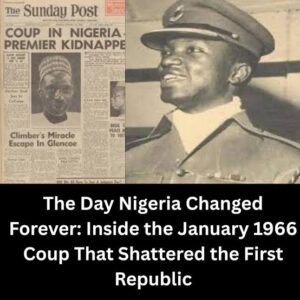
On January 15, 1966, Nigeria woke up to gunfire in Lagos, Ibadan, and Kaduna. By sunrise, the First Republic was dead. Prime ministers, premiers, and senior military officers had been killed. The army was in charge. Sixty years later, that night is still the reference point for how politics, ethnicity, and the military became tangled in Nigeria.
Nigeria gained independence in 1960 with a federal structure designed by British colonial administrators. It created three large regions: the Hausa-Fulani dominated North, the Yoruba dominated West, and the Igbo dominated East. The North had a larger population than the other two combined, which gave it permanent advantage in parliament. Southern politicians saw this as unfair, and trust between regions was thin.
Corruption and flawed elections made it worse. The national censuses of 1962 and 1963 were openly inflated as regions fought for seats and funding. The federal election of 1964 was widely rejected as fraudulent.
The breaking point came in the West. The 1965 Western Region election was rigged by the ruling party. Protesters responded with what became known as Operation Wetie. The word means “douse it” in Yoruba, a reference to pouring petrol on opponents and their property. Arson spread, government collapsed, and the federal government refused to declare a state of emergency. To young officers, the political class looked beyond saving.
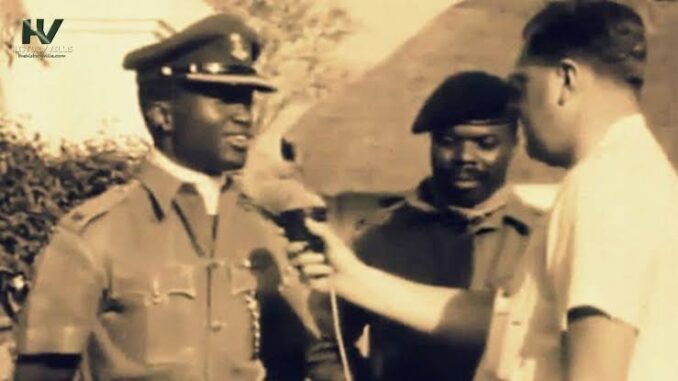
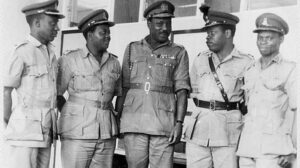
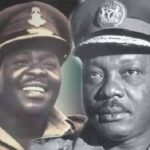
In the early hours of January 15, a group of majors calling their plan Operation Damisa, Operation Leopard, moved. The ideological lead was Major Emmanuel Ifeajuna. The tactical lead in the North was Major Chukwuma Kaduna Nzeogwu. They said their goal was to end corruption.
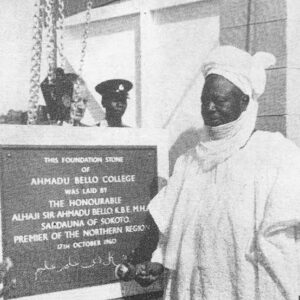
The attacks were coordinated. In Kaduna, Nzeogwu’s men killed Sir Ahmadu Bello, the Sardauna of Sokoto and Premier of the Northern Region, and his wife. In Ibadan, Chief Samuel Ladoke Akintola, Premier of the Western Region, was killed after a gunfight. In Lagos, Prime Minister Sir Abubakar Tafawa Balewa and Finance Minister Festus Okotie-Eboh were taken and later found dead on the Lagos-Abeokuta road.
To secure control, the plotters also killed senior military officers who commanded troops. Those included Brigadier Samuel Ademulegun, Brigadier Zakariya Maimalari, and Colonel Kur Mohammed.
As an assassination, the coup succeeded. As a takeover, it failed. The plotters did not arrest Major General Johnson Aguiyi-Ironsi, the head of the army. He gathered loyal troops in Lagos and moved to restore order. With the civilian leadership gone, the remaining cabinet handed power to Ironsi. Nigeria’s first military government began.
But the pattern of killings created a problem. Most of the majors involved were Igbo officers from the East. Northern and Western political leaders were killed. No senior Igbo politicians, such as President Nnamdi Azikiwe or Eastern Premier Michael Okpara, were harmed.
The coup leaders said their motive was national, not ethnic. To many in the North, the casualty list looked different. It looked like a plot. That perception mattered more than intent.
Ironsi tried to hold the country together. His Decree 34 abolished the federal regions and unified the civil service. In the North it was read as an attempt to erase regional autonomy.
Six months later, in July 1966, Northern officers struck back. Ironsi and Western military governor Adekunle Fajuyi were killed. Lieutenant Colonel Yakubu Gowon emerged as head of state.
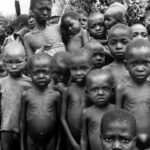
Violence then moved to the streets. In the North, mobs targeted Igbo civilians in what became known as the pogroms. Tens of thousands died. Millions fled east. The breakdown of trust made secession inevitable. In 1967, the Eastern Region declared independence as Biafra. The civil war that followed lasted until 1970 and cost over one million lives, most from starvation and blockade.
The January coup ended Nigeria’s First Republic and set a precedent. It showed that when civilian institutions failed, soldiers would step in. It also showed how quickly a political crisis could become an ethnic one.
Nigeria has had many coups since, and many attempts at reform. But the events of that night explain a lot about later politics: the fear of domination, the sensitivity around federalism, and the memory of violence.
It was not just an army mutiny. It was the moment Nigeria’s post-independence contradictions exploded, and the country has been managing the fallout ever since…See_More

Leave a Reply