
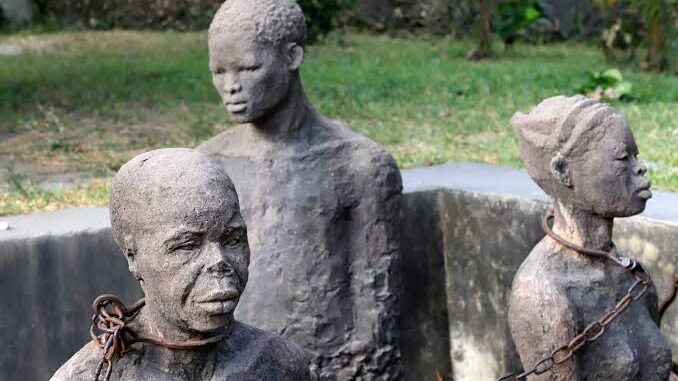
When slavery in the Atlantic is discussed, the story usually ends there. But for more than 1,200 years another trade was moving millions of Africans across the Sahara and across the Indian Ocean. It began in the 7th century with the expansion of the Umayyad Caliphate and continued into the 20th century. Historians call it the trans-Saharan and Indian Ocean slave trade, sometimes grouped as the Oriental or Arab slave trade.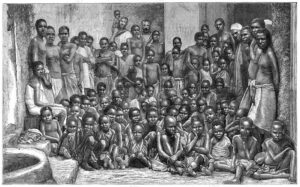
The trade stretched across three main corridors. From East Africa, especially the Swahili coast and Mozambique, captives were shipped to Arabia, Persia, and India. From the Horn of Africa, including Ethiopia and Somalia, people were taken north. From the Sudanic belt in the Sahel, caravans crossed the Sahara to North Africa and the Middle East.
The purpose was different from the Atlantic plantation system. Enslaved Africans were used for domestic work in households, for agriculture such as the Zanj labor in Iraqi salt marshes, for military service as slave soldiers, for administrative roles, and for concubinage. Because the demand was varied, the system looked different on the ground.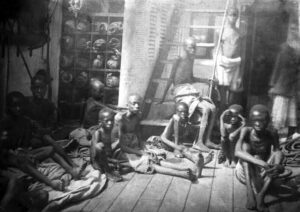
Zanzibar became one of the largest hubs in the 18th and 19th centuries under the Omani Sultanate. The island ran major slave markets and used enslaved labor on clove plantations. Caravans also moved through Timbuktu, Gao, and Tripoli, linking the interior to Mediterranean markets.
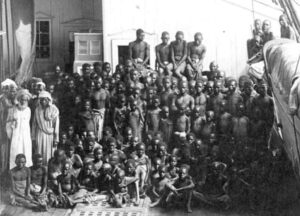
The journey killed many before they reached a destination. Crossing the Sahara meant dehydration, disease, and exhaustion. Sea voyages on dhows across the Indian Ocean were also dangerous.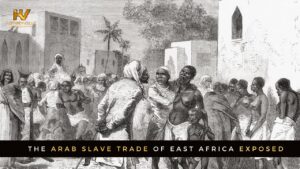
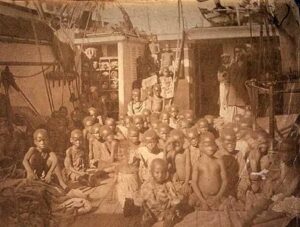
The gender ratio differed from the Atlantic trade. Roughly two men were shipped for every one woman across the Atlantic. In the eastern trade, women and children made up a larger share. They were sought for domestic labor and for concubinage.
Castration was practiced on some male captives intended for palace or harem service. The procedure was dangerous and had a high mortality rate. It also meant fewer male captives could form families.
Islamic law created a different path for descendants. A child born to an enslaved woman and her master was considered free and legitimate. Manumission was also encouraged as an act of piety. Over generations, many descendants assimilated into Arab, Persian, and North African societies.
Because captives were usually placed individually in households rather than in large plantation communities, distinct African languages, religions, and cultural institutions were harder to maintain. That is one reason there is no large, politically organized diaspora in the Middle East comparable to Afro-Caribbean or African American communities.
 Estimates vary, but historians place the total number trafficked between 11 million and 18 million over the centuries. That was a continuous drain of young, productive people from East Africa, the Horn, and the Sahel.
The effects went beyond numbers. Raids destabilized communities, disrupted farming and trade, and weakened political structures. Some economic historians note a correlation between regions heavily targeted in the past and areas today that struggle with lower levels of trust, fragmented institutions, and slower development. That is debated, but the demographic loss is not.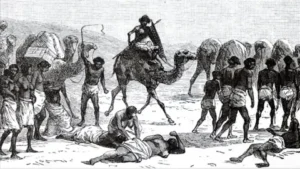
The legacy is not only historical. Human rights groups have documented vulnerabilities in the modern Kafala labor system in Gulf states, and forms of hereditary servitude that persist in parts of the Sahel. Mauritania criminalized slavery in 2007, but enforcement remains a challenge.
Why This History Is Less Familiar
Three factors explain the gap in public knowledge.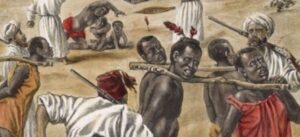
First, there is no large visible diaspora to keep the memory alive in the same way as in the Americas.
Second, in the 20th century, anti-colonial and Pan-African movements emphasized solidarity between African and Arab states against European imperialism. Discussing earlier conflicts between the regions was often set aside for political reasons.
Third, Western education systems focused on their own role in the Atlantic trade. That left eastern trade networks with far less coverage in textbooks.
The Arab slave trade does not cancel or compete with the Atlantic story. It runs alongside it. Together they explain how Africa lost millions of people over more than a millennium, through different routes, for different labor systems, and with different long-term outcomes.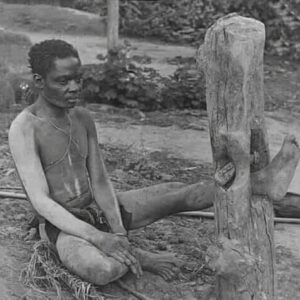
Remembering this history is not about blame. It is about filling a gap. When we include the Sahara and the Indian Ocean, we get a fuller picture of how slavery shaped populations, economies, and cultures across Africa and beyond. And we understand more clearly why some of the pain was forgotten, and why it still matters today…See_More




Leave a Reply