
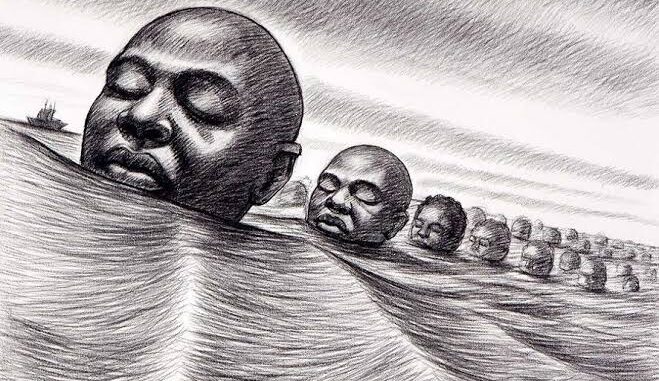
Mmụọ mmiri du anyị bịa, mmụọ mmiri ga-edu anyị laa.”
“The water spirit brought us, the water spirit will take us home.
This is the story of Igbo Landing, also called Ebos Landing. It happened in May 1803 at Dunbar Creek on St. Simons Island, Georgia. It is remembered as one of the most defiant acts of resistance in the history of transatlantic slavery, when a group of West African captives chose death over bondage.
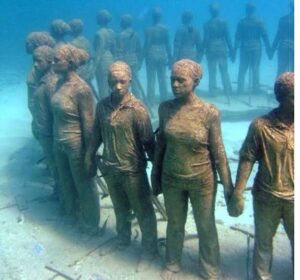
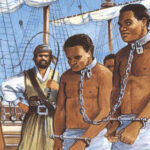
In 1803, about 75 Igbo captives were taken from the hinterlands of what is now southeastern Nigeria. They survived the Middle Passage and arrived in Savannah, Georgia, on a slave ship called The Wanderer. They were sold for about 100 dollars each to agents working for coastal plantation owners John Couper and Thomas Spalding.
To move them to St. Simons Island, the captives were put aboard a smaller vessel, The York. During that short coastal trip, the Igbo, who were known to slaveholders as fiercely independent and resistant, broke their restraints. They staged a sudden mutiny, attacked the crew, and killed their captors. In the chaos the ship ran aground in the shallow, muddy waters of Dunbar Creek.
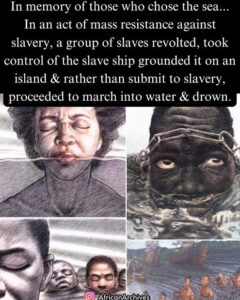
Once on land, the Africans saw that they were still surrounded. Plantation authorities were waiting and recapture was certain. Rather than accept a life of torture and forced labor, they made a collective decision.
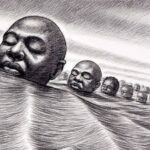
Led by a chief or priest among them, the group put their chains back on, walked together to the marshy bank, and entered the water. As they waded out, they sang to the water spirit in Igbo:
“Mmụọ mmiri du anyị bịa, mmụọ mmiri ga-edu anyị laa.”
“The water spirit brought us, the water spirit will take us home.”
Contemporary reports written by overseers like Roswell King state that 10 to 12 bodies were recovered from the creek. Local oral history says most of the 75 perished together, refusing to be enslaved.
Savannah Port to The Wanderer, then The York to St. Simons. Mutiny at sea, vessel grounds at Dunbar Creek. Then the walk into the water, a march for freedom they believed would take them home.

For nearly 200 years, many historians dismissed Igbo Landing as folklore. After 1980, archival research and geographic records confirmed the basic facts. Shipping logs, plantation records, and local accounts line up with the story of a mutiny and mass drowning at Dunbar Creek in 1803.
The event left a deep mark on African American culture, especially among the Gullah Geechee people of the Georgia and South Carolina coast. From it came two legacies.
The Myth of the Flying Africans: In oral tradition, the Igbo did not drown. They grew wings, rose above the water, and flew back across the Atlantic to Africa.
The First Freedom March: Many scholars and community leaders now describe the walk into Dunbar Creek as the first major, unified act of collective resistance and self-determination on American soil.
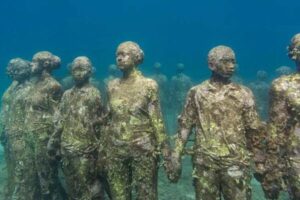
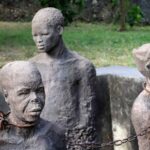
Dunbar Creek is treated as sacred ground by coastal Black communities in Georgia. The story has also moved into modern art and film.
In Beyoncé’s visual album Lemonade, the track Love Drought recreates women walking into water together, a direct homage to Igbo Landing.
In the film Black Panther, the character Killmonger says: “Bury me in the ocean with my ancestors who jumped from ships, ’cause they knew death was better than bondage.” That line draws directly from this history.
In literature, Toni Morrison’s Song of Solomon and other works echo the theme of flight, water, and choosing freedom over chains.
The Igbo who died at Dunbar Creek did not live to see freedom in this world. But their refusal became a story passed down for generations. It says that even in chains, people can choose who they are and how they meet their end.
For many, the chant is still a prayer. The water spirit brought us. The water spirit will take us home…See_More


Leave a Reply