An Indian Oil Tanker Was Fired Upon By IRGC Navy Gunboats And Forced To Turn Around, After Attempting To Cross The Strait Of Hormuz Without Iranian Approval
Iran’s Islamic Revolutionary Guard Corps fired on Indian-flagged oil tankers attempting to transit the Strait of Hormuz without prior approval on April 18, 2026, forcing multiple vessels to reverse course in a dramatic escalation of Tehran’s enforcement of reimposed passage controls.
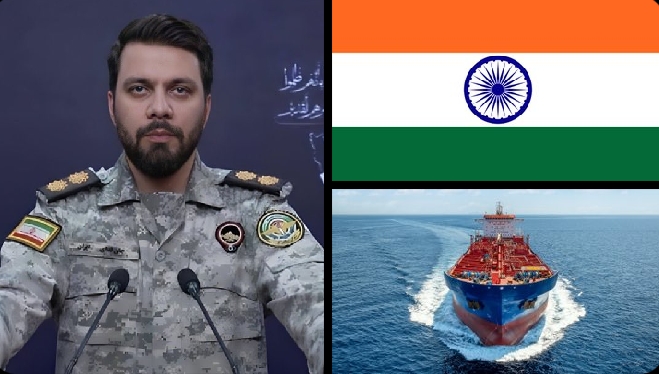
The incident, first reported by political commentator Jackson Hinkle with accompanying images of an IRGC official, the Indian flag, and an oil tanker, has been confirmed by verified maritime reports identifying specific affected vessels including the Sanmar Herald carrying two million barrels of Iraqi crude oil and the Jag Arnav.
The gunfire incidents occurred near Omani waters as Iranian authorities implemented strict approval requirements for all shipping transiting the strategic waterway, creating immediate complications for India’s critical oil imports from the Persian Gulf.
Verified maritime tracking and security reports confirm that IRGC fast attack boats intercepted multiple Indian tankers on April 18, firing warning shots when vessels attempted to proceed through the strait without obtaining advance Iranian authorization.
The Sanmar Herald, a very large crude carrier transporting approximately two million barrels of Iraqi oil destined for Indian refineries, was among the vessels forced to halt its passage and reverse course after Iranian gunboats fired across its bow.
The Jag Arnav, another Indian-flagged tanker, similarly turned back following IRGC enforcement actions that made clear Iran would not permit unauthorized transits regardless of the vessel’s nationality or cargo destination.
The incidents fit within the broader 2026 Strait of Hormuz crisis that has dominated global energy markets and geopolitics throughout the year.
After US and Israeli strikes on Iranian territory in February prompted Iran to initially close the strait entirely, a fragile ceasefire led to announced reopening with the critical caveat that Iran would enforce approval requirements for passage. Tehran justified this position by accusing the United States of violating Iranian sovereignty and territorial waters, arguing that Iran has the right to control traffic through what it considers its strategic waterway.
The approval system effectively gives Iran veto power over which vessels can transit, creating enormous uncertainty for global oil trade.
For India, the Iranian enforcement actions create particularly acute challenges given New Delhi’s heavy dependence on Persian Gulf oil imports. India imports approximately 85% of its crude oil needs, with significant volumes coming from Iraq, Saudi Arabia, UAE, and Kuwait, all of which must be shipped through the Strait of Hormuz.
The forced turnaround of Indian tankers carrying Iraqi crude demonstrates Iran’s willingness to disrupt even friendly nations’ energy supplies if proper approvals are not obtained. This creates logistical nightmares for Indian refineries and shipping companies who must now navigate Iranian bureaucratic approval processes with uncertain timelines while managing tight delivery schedules.
The timing on April 18 is notable as it coincides with increased Iranian assertiveness following the recent ceasefire and announced strait reopening. Iran appears to be testing how aggressively it can enforce approval requirements without triggering renewed American military action….See More





Leave a Reply