
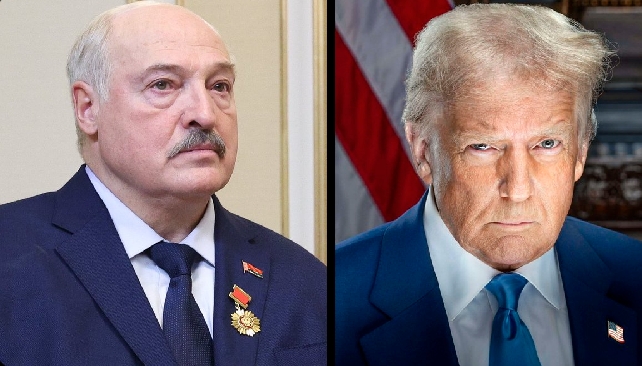
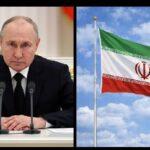
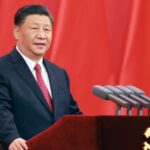
Belarusian President Alexander Lukashenko has stated that President Trump’s approach to Iran demonstrates the United States is a superpower but not an all-powerful “super force,” while warning Washington to show restraint toward China as a far greater strategic challenge.
Lukashenko’s remarks reference the recent US military operation dubbed “Epic Fury” that conducted precision strikes on Iranian military installations and nuclear facilities without attempting full-scale invasion or regime change.
As a key ally of Russia and one of Moscow’s closest partners, the Belarusian leader’s commentary reflects broader international debates about American military capabilities and limitations in complex modern conflicts despite unmatched global power projection abilities.
Operation Epic Fury, the American aerial campaign against Iranian targets that began in February 2026, involved extensive strikes using cruise missiles, stealth aircraft, and precision munitions to destroy Iranian nuclear enrichment facilities, missile production sites, Revolutionary Guard bases, and air defense systems.
The operation demonstrated America’s technological superiority and ability to conduct devastating attacks on hardened targets deep inside hostile territory. However, the US explicitly avoided ground invasion, regime change operations, or occupation attempts, instead limiting objectives to degrading Iranian military capabilities and nuclear infrastructure.
This restraint, whether strategic choice or recognition of practical limits, forms the basis of Lukashenko’s observation.
Lukashenko’s characterization of the US as a superpower but not a “super force” acknowledges American advantages in technology, global reach, and military spending while suggesting Washington cannot simply impose its will everywhere through force alone.
The Belarusian president appears to be drawing a distinction between having superior military capabilities, which the US unquestionably possesses, and having unlimited ability to achieve political objectives through those capabilities, which recent history suggests America lacks. Afghanistan, Iraq, and other interventions demonstrated that even overwhelming military superiority does not guarantee desired political outcomes when facing determined resistance, complex societies, and extended commitments….See More

Leave a Reply