A viral social media post highlighting that 1,000 Kuwaiti Dinars equals approximately 4.5 million Nigerian Naira has sparked intense online discussion about the dramatic gap between the world’s strongest currency and one of its weakest.
The comparison, based on current mid-market exchange rates of roughly 4,370 to 4,470 Naira per single Kuwaiti Dinar, illustrates the staggering purchasing power disparity between the oil-rich Gulf state and Africa’s largest economy.
The post generated massive engagement as Nigerians reacted with a mixture of frustration, dark humor, and genuine concern about the continued weakness of their national currency against virtually every major and minor global currency.
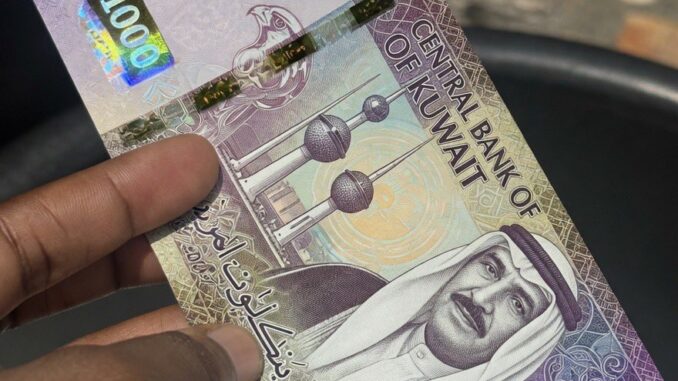
However, sharp-eyed social media users quickly spotted an error in the post’s visual presentation.
Multiple replies pointed out this mismatch between the image and the text, with some users providing detailed explanations of Kuwaiti currency denominations. Despite the visual error, the underlying exchange rate mathematics in the caption remains accurate, as 1,000 actual Kuwaiti Dinars would indeed convert to roughly 4.5 million Naira at current rates.
The Kuwaiti Dinar holds the distinction of being the world’s most valuable currency by unit, a position it has maintained for decades. This strength is underpinned by Kuwait’s enormous oil reserves relative to its tiny population of approximately four million people, its sovereign wealth fund that is among the largest globally, its stable political system within the Gulf context, and prudent monetary policies that have maintained the dinar’s value. Kuwait’s economy generates massive petroleum revenues that are distributed among a small population, creating per capita wealth levels among the highest in the world and providing the economic foundation for a currency that dwarfs most others in value.
The comparison struck a particular nerve with Nigerians because it highlights the paradox of their own country’s economic situation.
Nigeria is itself a major oil producer, Africa’s largest by volume, yet its currency has experienced relentless devaluation over the past decade.
While Kuwait has leveraged its petroleum wealth into currency strength and citizen prosperity, Nigeria’s oil revenues have been undermined by corruption, mismanagement, theft, subsidies, and failure to diversify the economy.
The result is that two oil-producing nations have achieved radically different outcomes for their currencies and citizens, with the Kuwaiti Dinar buying thousands of times more than the Nigerian Naira on international markets….See More







Leave a Reply