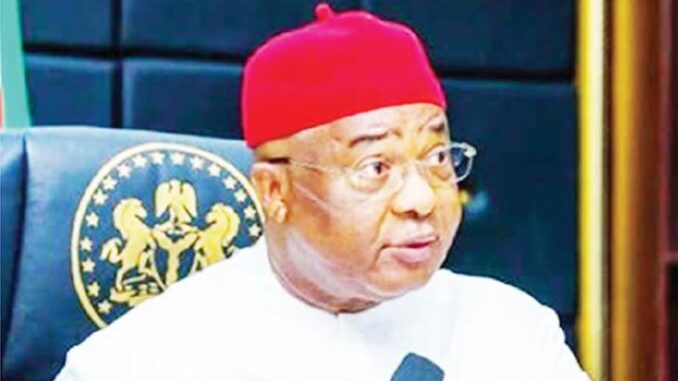
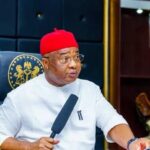
According to a report by Punch on Monday, May 11, 2026, the Chairman of the Progressive Governors’ Forum and Governor of Imo State, Hope Uzodimma, has stated that the economic reforms introduced by President Bola Ahmed Tinubu have helped restore fiscal stability in Nigeria, improved investor confidence, and placed the country on what he described as a clearer path toward economic recovery.
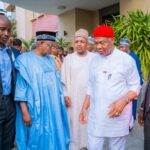
He made the remarks on Monday in Abuja during an engagement with members of the diplomatic corps under the platform of the Renewed Hope Ambassadors, where discussions focused on the direction of Nigeria’s economic policies since the beginning of the current administration.
Uzodimma explained that two major policy decisions taken early in the administration, particularly the removal of fuel subsidy and the liberalisation of the naira exchange rate, marked a significant turning point in Nigeria’s economic structure.
He said these decisions were critical in reshaping the country’s financial direction and addressing long-standing inefficiencies within the system.
According to him, the policies were introduced at a time when the economy required structural adjustments to reduce pressure on public finances and improve overall economic management.
The governor further stated that the removal of fuel subsidy helped to reduce what he described as long-standing leakages in public expenditure.
He explained that the subsidy system had existed for many years and had become difficult to manage due to alleged irregularities within the process.
He added that over time, the system created opportunities for financial abuse involving different actors within the supply chain.
He noted that international financial institutions had also previously advised against maintaining such subsidy arrangements due to their impact on national revenue and budget sustainability.
Uzodimma also described the subsidy regime as one that had become deeply embedded in the country’s economic structure, allowing a network of individuals and groups to benefit from government spending in ways that were not always transparent.
He said the removal of the subsidy on the first day of the administration was a major policy shift that immediately changed the structure of government spending.
According to him, the decision helped redirect public funds toward other developmental areas and reduced the burden on national finances, which had been heavily affected by subsidy payments over the years.
He said, “state governments now receive net allocations in the order of 700 to 800 billion naira monthly….See More

Leave a Reply