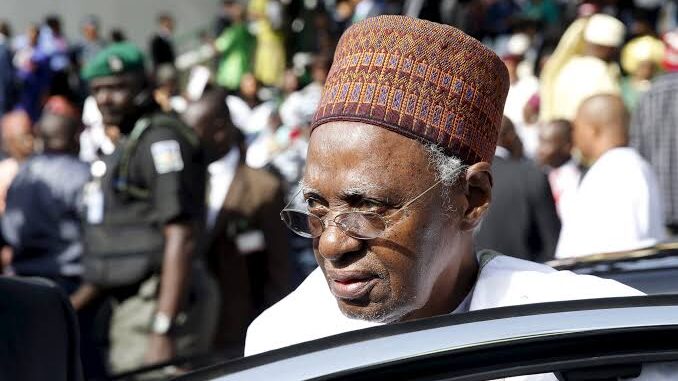
President Shehu Shagari was overthrown on December 31, 1983, in a military coup led by Major General Muhammadu Buhari. While corruption was a major reason cited by the coup leaders, it was not the only factor behind the collapse of Nigeria’s Second Republic.
In his nationwide broadcast announcing the takeover, Buhari described the Shagari administration as “corrupt, incompetent and insensitive.”
The military leadership justified its intervention by pointing to widespread graft, economic mismanagement, electoral malpractice in the 1983 general elections, and what it called a general decline in discipline across public life.
The coup leaders presented themselves as a corrective force stepping in to rescue the nation.
Beyond the official statements, Nigeria was facing a severe economic crisis at the time. By 1983, global oil prices had fallen sharply, drastically reducing government revenue in a country heavily dependent on oil exports Foreign debt was rising, unemployment was increasing, and shortages of essential goods were common. Inflation and declining living standards fueled public frustration.
Corruption allegations were also widespread during the Second Republic. Members of the political class were accused of inflated contracts, diversion of public funds, and financial scandals.
Critics argued that government spending was reckless and poorly managed. Public confidence in civilian leadership weakened as accusations mounted.
The 1983 general elections further damaged the government’s legitimacy. The polls were marred by reports of rigging, violence, and irregularities.
Opposition parties rejected the results in several states, and tensions escalated across the country.
Many Nigerians believed the electoral process had been compromised, deepening political instability.
At the same time, the military had a long history of intervening in Nigeria’s politics, having ruled for much of the period since independence.
Like other African militaries during that era, Nigeria’s armed forces often viewed themselves as guardians of national stability. When civilian administrations were perceived as failing, segments of the military leadership were willing to step in.
Following the coup, Shagari was arrested and detained. The Buhari regime launched a campaign against corruption, arresting and trying several politicians from the Second Republic.
However, the military government itself would later face criticism before being overthrown in another coup in 1985.
The 1983 takeover marked the end of Nigeria’s Second Republic and reinforced the pattern of military intervention in the country’s political development.
While corruption was a central justification, the broader context of economic collapse, disputed elections, and institutional weakness all contributed to the dramatic shift in power…See More

Leave a Reply