
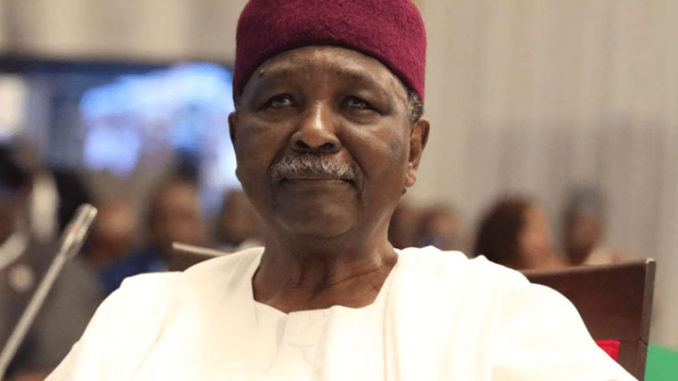
According to a report by Vanguard on Thursday, May 21, 2026, former Head of State, Yakubu Gowon, has revisited one of the most painful periods in Nigeria’s history, alleging that the late Biafran leader, Chukwuemeka Odumegwu Ojukwu, obstructed several attempts aimed at preventing the country from descending into civil war.
The allegation was detailed in Gowon’s autobiography, My Life of Service and Allegiance, where he provided a personal account of the unsuccessful peace negotiations, deep political suspicion, and constitutional disagreements that eventually derailed discussions between the federal military government and the Eastern Region before the outbreak of the 1967–1970 Nigerian Civil War.
Gowon explained that multiple efforts were undertaken to secure a political resolution following the killings of Igbo people in parts of Northern Nigeria, incidents that fueled widespread anger, fear, and increasing separatist sentiments across the Eastern Region.
According to him, these tensions intensified divisions at a critical period when the country was struggling to preserve national unity.
The former military leader maintained that negotiations continued despite the worsening atmosphere, but disagreements over governance arrangements and constitutional interpretation complicated attempts to achieve common ground.
He suggested that differing positions on how Nigeria should be structured contributed significantly to the collapse of reconciliation efforts.
Gowon further argued that Ojukwu’s understanding of the Aburi Accord differed substantially from what had been discussed during negotiations.
He stated that the interpretation advanced by the Eastern Region’s leadership would have considerably reduced the powers of the Federal Government and created conditions that could threaten the country’s ability to remain united.
According to Gowon, the implementation of the accord as interpreted by Ojukwu would have left the central government with weakened authority, making it difficult to sustain a cohesive national framework.
He insisted that preserving a functioning federal structure was essential at the time, amid rising tensions and uncertainty across different regions of the country.
“What was presented by Ojukwu as the Aburi Accord was, in reality, his own interpretation of our discussions,” he wrote…See More



Leave a Reply