American intelligence and surveillance assets are maintaining continuous observation of seized vessels and Iranian naval movements along the coastline of the Strait of Hormuz, yet critical gaps remain in what US officials can definitively confirm about Iranian intentions and actions. Retired US Army Colonel Joe Buccino, former communications director of US Central Command, addressed this tension directly during a France 24 interview, offering a candid assessment of both the capabilities and the limits of American situational awareness in the region.
Buccino confirmed that satellite surveillance is actively covering the area, stating: “We have satellites watching every move in that region — we know where the ships are sitting but what happens next is still unknown.” The statement captures the fundamental challenge confronting US intelligence analysts — the ability to track physical assets and movements does not automatically translate into clarity about Iranian decision-making, crew disposition, or next steps.
Vessels seized by Iranian forces have been observed relocating to positions along the Iranian coastline within the Strait of Hormuz. Coastal batteries and offloading infrastructure along that shoreline have been identified as initial transfer points where ships are brought following seizure operations. Beyond that stage, however, what happens to the vessels, their cargo, and critically their crews remains a matter of incomplete intelligence and unverified inference.
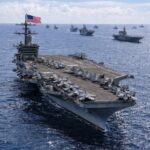
Buccino’s acknowledgment of these surveillance limitations is particularly significant given the scale of American military commitment in the region. With more than 30 warships now deployed, including three carrier strike groups representing the largest US naval presence in the area since the Iraq War of 2003, the United States possesses formidable tools of observation and force projection. Yet surveillance technology, however sophisticated, cannot fully penetrate the deliberate information opacity that Iran maintains around its internal military and custodial operations.
The intelligence gap has direct operational consequences. Without confirmed knowledge of where crews are held, under what conditions, and under whose authority, American commanders face significant constraints in designing responses that protect civilian maritime personnel without triggering unintended escalation…See More





Leave a Reply