
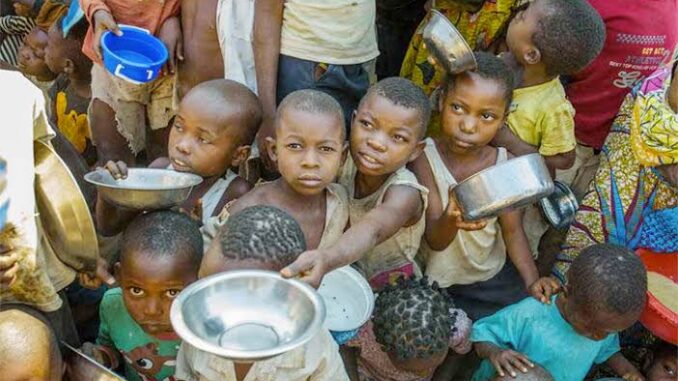
Nigeria’s national poverty rate has risen to sixty-three percent in 2025, affecting approximately one hundred and forty million people, up from fifty-six percent in 2023, according to World Bank data released in its April 2026 Nigeria Development Update.
The increase occurred despite a reported easing of inflation, a paradox that highlights the gap between macroeconomic indicators and the lived reality of ordinary Nigerians.
The World Bank noted that macroeconomic reforms implemented by the government, including the removal of the fuel subsidy, have contributed to a reduction in headline inflation figures but have failed to quickly improve household welfare.
Wage growth has not kept pace with the cost of living, and food prices remain prohibitively high for low-income groups, leaving millions of people worse off even as official statistics suggest that the economy is stabilising.
The data, shared by NigeriaStories, has triggered strong public scepticism toward government claims of economic progress. Users questioned the validity of inflation statistics that show declining rates while their daily experiences of rising costs for food, transportation, and housing tell a different story. The debate reflects a broader mistrust of official economic data and a perception that the government manipulates or selectively presents figures to create the appearance of improvement while conditions on the ground continue to deteriorate.
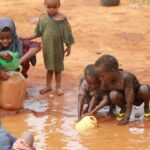
Sixty-three percent poverty means that nearly two out of every three Nigerians are living below the national poverty line, a threshold that measures the minimum income needed to meet basic needs including food, shelter, and clothing. For a country of over two hundred million people, that translates to one hundred and forty million individuals whose daily reality is defined by deprivation, insecurity, and a lack of access to the resources and opportunities that make upward mobility possible. The scale is staggering, and the trajectory is alarming. Poverty is not just persistent. It is accelerating.
The World Bank’s observation that inflation has eased but poverty has worsened underscores the inadequacy of using inflation as the primary measure of economic health. Inflation measures the rate at which prices are rising, but it does not capture whether people can afford those prices or whether their incomes are keeping up. If inflation drops from thirty-five percent to twenty-eight percent, that is technically an improvement, but it does not mean that food is affordable. It means that food prices are rising more slowly than they were before, which is cold comfort to someone who could not afford food at the previous rate and still cannot afford it now.
The fuel subsidy removal, a policy championed by the Tinubu administration and supported by international financial institutions including the World Bank and IMF, was supposed to free up fiscal resources that could be redirected toward infrastructure, healthcare, and social programmes. The logic was that subsidising fuel was unsustainable, that it drained government revenue and benefited the wealthy more than the poor, and that removing it would create space for more equitable and effective spending. What actually happened is that the removal triggered immediate and sharp increases in transportation costs, which fed into every other sector of the economy. Food became more expensive to transport and therefore more expensive to buy. Rent increased because landlords passed on higher generator fuel costs. And wages, which were already insufficient, became even less adequate as the cost of living surged.
The World Bank’s acknowledgment that reforms have failed to quickly improve household welfare is a diplomatic way of saying that the policies hurt people and the promised benefits have not materialised. The question is whether those benefits will eventually arrive or whether the entire framework is flawed and incapable of delivering the outcomes it was designed to produce. The data suggests the latter, but the institutions and governments pushing the reforms are not prepared to admit that possibility….See More
Leave a Reply