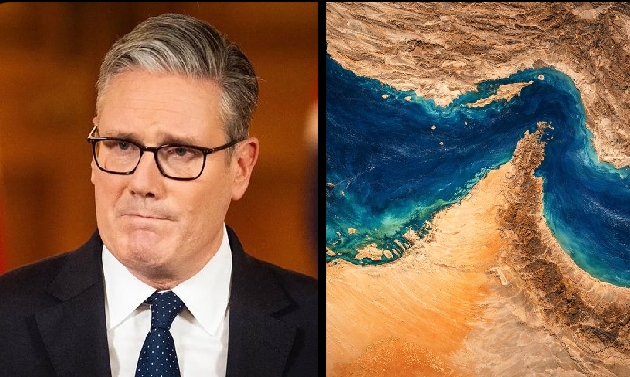
UK Prime Minister Keir Starmer has stated that reopening the Strait of Hormuz will not immediately return oil and gas prices to pre-crisis levels.
The Strait of Hormuz, through which roughly 20 percent of the world’s oil supply passes, has faced severe interruptions since the February 2026 escalation of the US-Israel conflict with Iran. Iranian restrictions, naval blockades, and heightened military activity caused shipping traffic to drop by more than 90 percent at the peak of the crisis.
Crude oil prices surged above $110 to $130 per barrel during the disruption.
Although shipping lanes are gradually reopening under fragile ceasefire arrangements, Starmer warned that market conditions have fundamentally shifted.
He noted that restoring physical access to the waterway does not automatically reverse the economic consequences of months of instability.
Energy analysts point to several persistent factors keeping prices elevated. Insurance premiums for tankers transiting the Gulf have risen sharply due to perceived risk, and some shipping routes remain partially rerouted to avoid conflict zones. Supply chains disrupted during the blockade are still stabilizing, while market confidence has been shaken by the volatility.
Higher oil prices have ripple effects across global economies, influencing fuel costs, electricity generation, manufacturing expenses, and consumer goods pricing. In the United Kingdom, elevated energy costs add pressure to household bills and business operations at a time when inflationary concerns remain sensitive.
Starmer’s comments reflect broader economic caution among Western governments. Even with diplomatic efforts aimed at sustaining the ceasefire, investors and traders continue pricing in geopolitical risk.
The memory of prolonged shipping paralysis has introduced a risk premium that may take time to unwind.
While some analysts expect gradual easing if stability holds, others argue that structural shifts in energy markets could keep prices above pre-crisis averages for an extended period.
The episode has also renewed discussions in Europe about energy diversification, strategic reserves, and long-term transition strategies….See More



Leave a Reply