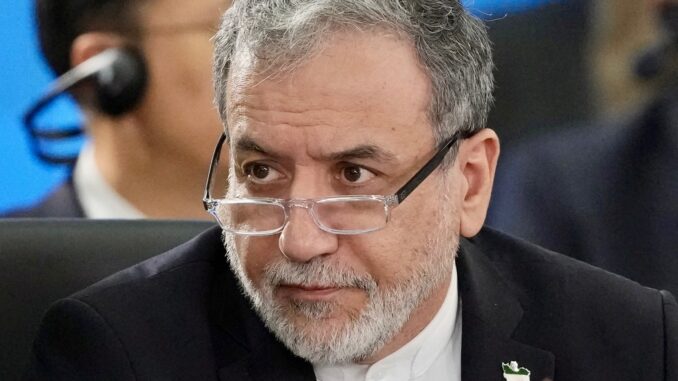
Iranian Foreign Minister Abbas Araghchi has stated that Tehran will not be “intimidated like Venezuela,” warning that unlike cases where targeting a single individual reportedly causes others to retreat, Iran remains committed to national resilience.
The remarks come amid heightened tensions between Iran and the United States in 2026, centering on three main areas of friction: an ongoing dispute over a bilateral Memorandum of Understanding, escalating rhetoric and threats from both sides, and renewed concerns over security in the Strait of Hormuz.
Araghchi’s comments underscore Tehran’s broader messaging this year. Iranian officials have repeatedly framed U.S. pressure as an attempt to coerce policy changes through targeted actions and sanctions. By referencing Venezuela, the Foreign Minister appeared to reject what he described as a model of deterrence based on isolating leadership, arguing instead that Iran’s state institutions and public resolve are structured to withstand external pressure.
The statement was widely circulated by the BRICS-focused account @BRICSinfo, which presented Iran’s position as aligned with a push for strategic independence and deeper cooperation within multipolar geopolitical frameworks. The framing connects Iran’s current standoff with Washington to its expanding partnerships with BRICS members and other non-Western powers, positioning Tehran not as isolated, but as part of a shifting global order that seeks to reduce reliance on U.S.-led systems.
Security in the Strait of Hormuz remains a particular flashpoint. As one of the world’s most critical energy transit routes, any disruption there carries global economic implications. Iranian officials have signaled that maritime security will be defended as a matter of sovereignty, while calling for diplomatic channels to remain open.
The dispute over the bilateral MoU adds another layer. While details remain limited, disagreements reportedly involve compliance, sanctions relief, and regional commitments…See_More


Leave a Reply