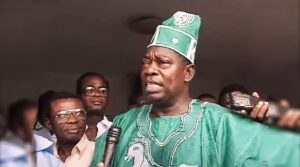
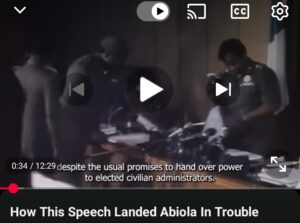
On June 11, 1994, Chief Moshood Kashimawo Olawale Abiola stepped onto a podium in Epetedo, Lagos and delivered a speech that changed the course of Nigerian politics. Titled “Enough is Enough,” the speech turned a long political stalemate into an open confrontation with the military government of General Sani Abacha. Within two weeks, Abiola was arrested and charged with treason. He would spend the next four years in detention until his death in custody on July 7, 1998.
The Catalyst: The Epetedo Declaration
The June 12, 1993 presidential election had been won by Abiola, but the results were annulled by the military regime of General Ibrahim Babangida. For one year, Nigeria lived in uncertainty. Protests, strikes, and negotiations went nowhere.
On the first anniversary of that election, Abiola spoke directly to the people. In his address he made three declarations that broke the stalemate.
First, he claimed supreme power. He announced himself as the rightful President and Commander-in-Chief of the Nigerian Armed Forces.
Second, he announced an alternative government. He called for the reconstitution of the National Assembly and asked elected governors to return to their offices.
Third, he directly defied the junta. He described Abacha and his colleagues as “politicians in uniform” and ordered them to hand over power.
That speech moved the crisis from politics to law. From the regime’s point of view, Abiola had crossed a line.
What Really Made Abacha Arrest Him
The speech was the immediate trigger, but the arrest on June 23, 1994 was driven by deeper calculations.
The charge of treason gave Abacha legal cover. By declaring himself Commander-in-Chief, Abiola had committed what the military code called a treasonable felony. That allowed the government to move from political pressure to criminal prosecution.
Abacha had taken power in November 1993. He needed to show that no rival authority would be tolerated. Allowing Abiola to act as a parallel president would have weakened the chain of command inside the military and the civil service.
There was also fear of defection. A self-declared president could split loyalties within the armed forces. Arresting Abiola sent a message to senior officers that dissent would be crushed.
Finally, the speech was energizing civil society. Groups like NADECO, labor unions, and student bodies were mobilizing. By detaining Abiola, the regime aimed to decapitate the leadership of the pro-democracy movement and demoralize its supporters.
Historians are still divided on whether Epetedo was a masterstroke or a miscalculation.
On the side of courage, the speech cemented June 12 in Nigeria’s political memory. It made it impossible for future governments to pretend the election did not happen. It transformed Abiola from a businessman and politician into a national symbol of democracy and resistance. The timing also drew maximum attention, using the anniversary to capture both local and international headlines.
On the side of miscalculation, the speech forced a direct confrontation with a regime known for its ruthlessness. It closed the door on backdoor negotiations that were still ongoing. Once in prison, Abiola was cut off. He spent years in solitary confinement and lost the ability to coordinate the movement on the ground. The regime also showed it was willing to ignore diplomatic pressure and use extreme measures to stay in power.
Ultimately, the military could not afford to leave Abiola free, and Abiola could not afford to stay silent. The result was a standoff that lasted until 1998.
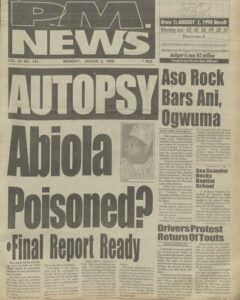
Abiola died in custody just weeks after Abacha himself died. One year later, Nigeria returned to civilian rule in 1999. The moral weight of June 12 and the sacrifice around it became a reference point that made it harder for the military to return.
Today, June 12 is recognized as Democracy Day. Abiola’s name is on institutions, streets, and in national discourse. The Epetedo speech is remembered as the moment he chose principle over compromise.
To explore this turning point further, we can look at three areas next: the international diplomatic efforts to free Abiola, the specific role of NADECO and civil groups during the struggle, or how the legacy of June 12 shapes Nigerian politics today….See_More


Leave a Reply