History: Check Out India’s Most Strange Temple In Rajasthan, You Can Find Almost 50,000 Rats Here And Here Are The Powerful Reasons Why They Are Being Worshipped
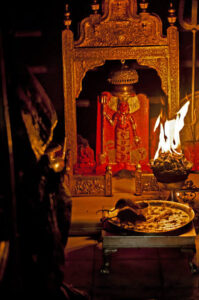
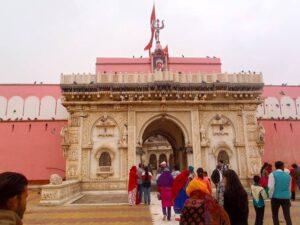
In the desert town of Deshnoke, about 30 kilometers from Bikaner in Rajasthan, India, stands one of the most unusual temples in the world. It is the Karni Mata Temple, and it is known globally as the “Temple of Rats.”
Inside its white marble walls live between 25,000 to 50,000 black rats. Locals call them kabas. Instead of being chased away, they are fed, protected, and worshipped.
Here is the history, the powerful reasons behind their worship, and the unique rules of this sacred site.
The Legend: Why Rats Are Worshipped
The story goes back to the 14th century and to Karni Mata, a Hindu warrior sage who is believed to be an incarnation of the goddess Durga. She was deeply respected by the Charan community and later by Rajput rulers.
The central legend is about her stepson, Laxman. According to folklore, Laxman drowned in a pond while trying to drink water. Karni Mata was heartbroken. She prayed intensely to Yama, the God of Death, and begged him to bring Laxman back to life.
Yama first refused. After much prayer, he made a deal. Laxman and all of Karni Mata’s male descendants would not enter the normal cycle of death. Instead, they would first be reborn as rats before returning to human form in her clan.
Because of this pact, devotees do not see the rats as pests. They believe the kabas are their ancestors, their family members waiting to be reborn as humans again. That is why harming them is considered a sin.
Unique Miracles and Anomalies
What makes the temple even stranger is what does not happen there.
Despite housing tens of thousands of rodents in one place, the temple and the town of Deshnoke have never recorded an outbreak of plague or other rat-borne diseases. Devotees see this as proof of divine protection.
Another anomaly is the white rats. Among thousands of black rats, there are a few rare white ones. Spotting a white rat is considered extremely lucky. Many believe these white rats are Karni Mata herself and her four sons. People will wait for hours just to catch a glimpse.
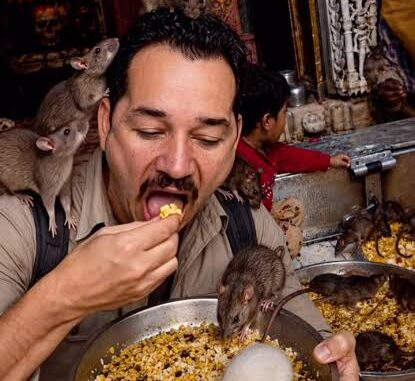
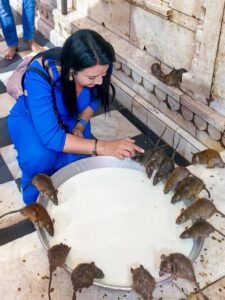
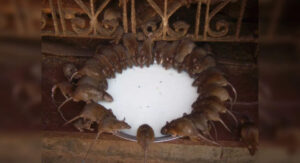
Food also plays a big role. Offerings of milk, sweets, and grains are left out for the rats. Once the rats have nibbled on the food, it is collected and given back to pilgrims as prasad. Eating this leftover food, called jutha, is believed to bring blessings and good fortune.
Visitors also notice something else. Despite the huge number of rats, the temple does not have the strong smell you would expect. Many call it another sign of the goddess’s presence.
Strict Temple Customs and Rules
Visiting Karni Mata Temple is not like visiting other temples. There are rules you must follow.
First, you must enter barefoot. Shoes are not allowed inside.
You must walk carefully. Devotees shuffle their feet on the marble floor instead of lifting them. The idea is to avoid accidentally stepping on a rat. Hurting a rat is taken very seriously.
If a visitor does accidentally kill a rat, temple tradition says they must replace it. The replacement has to be a rat made of solid gold or silver. The penalty is not about money. It is about showing respect for life and for the pact with Karni Mata.
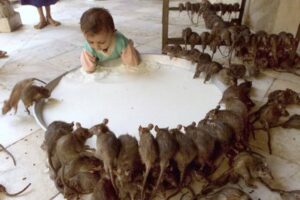
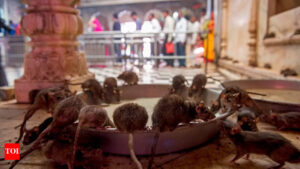
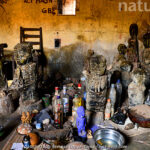
The rats themselves move freely. They climb over statues, drink from large bowls of milk, and sleep in corners. Priests feed them daily and clean the temple constantly. The rats are treated like honored guests.
Thousands of pilgrims visit every year, especially during the Navratri festivals. Some come to pray for children, health, or prosperity. Others come out of curiosity.
For the Charan community and many Rajasthani families, the temple is a place of direct connection to their ancestors. They believe that by caring for the rats, they are caring for their own future kin.
The Karni Mata Temple challenges everything we think we know about cleanliness, worship, and the line between humans and animals.
To outsiders it may look strange. To devotees it is sacred. The rats are not an infestation. They are family. They are a promise made by a goddess to her people, and a reminder that in faith, even the smallest life can be divine.
If you ever visit Rajasthan, this is one temple you will never forget. Not because of gold or grand statues, but because of 50,000 tiny guardians who are worshipped like gods…See_More






Leave a Reply