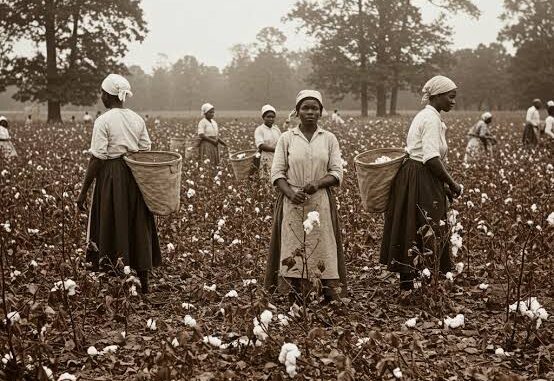
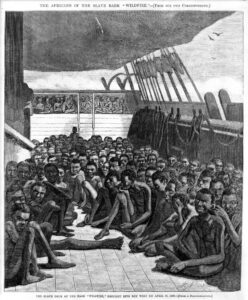
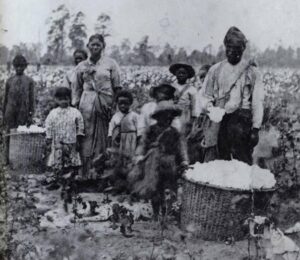
When people talk about American slavery, they often focus on ships and cotton fields. A chapter that gets less attention is what happened after 1808, when the transatlantic slave trade was legally closed. That law did not end the demand for labor. It changed where the labor came from. Inside the United States, human beings became the product.
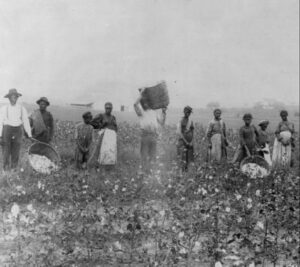
Two forces made this shift inevitable. The first was the cotton gin, patented by Eli Whitney in 1793. It made short-staple cotton profitable on a massive scale. Suddenly, land across Alabama, Mississippi, Georgia, and Louisiana was worth money if you could plant and pick cotton fast enough.
The second was the Act Prohibiting Importation of Slaves, which took effect in 1808. The law banned bringing new captives from Africa, but it did not ban slavery itself. At the exact moment cotton was expanding, the external supply was cut off. Planters in the Deep South still needed workers.
States in the Upper South, like Virginia and Maryland, had worn out their soil growing tobacco. They could not compete in cotton. So they changed businesses. They began producing and selling people to the new cotton states. Historians call this the domestic slave trade, and it moved an estimated one million enslaved people south and west between 1808 and 1860.
The Mechanism of Forced Reproduction
Under American law, enslaved people were classified as chattel property. That meant they could be bought, sold, mortgaged, and inherited like livestock or land. Plantation owners kept ledgers that tracked births the same way they tracked bales of cotton or bushels of corn.
Because the law of partus sequitur ventrem had been established in Virginia as early as 1662, the status of the child followed the status of the mother. If the mother was enslaved, the child was born enslaved. That legal rule turned reproduction into a business model. Every child born on a plantation was future labor, and future capital.
To increase that output, slaveholders used several methods. There was direct violence and coercion. There were also financial incentives and forced pairings, where men and women were matched by the owner to produce children. Women known to have many children were sometimes valued more and sold at higher prices. Advertisements in newspapers occasionally listed a woman’s fertility as a selling point.
This was not called breeding in polite society at the time. It was called increasing the stock. The language hid the reality.
The Destruction of the Family Unit
The domestic trade depended on breaking families apart. People were marched south in coffles, chained groups walking overland, or shipped on coastal vessels. Once in the Deep South, they were sold individually.
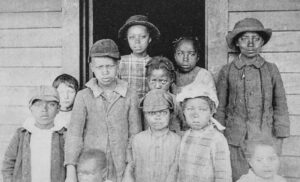
Children were routinely separated from parents once they were old enough to work or to be sold. That separation was not accidental. It was built into the system. A child sold at age 8 or 10 represented immediate profit, and the mother left behind was expected to have more.
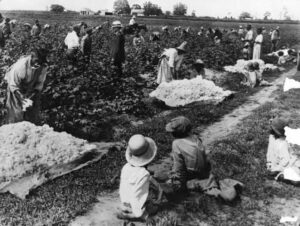
Pregnancy did not exempt women from labor. Field work continued late into pregnancy, and women were often returned to the fields days after giving birth. The goal was continuous production, both of cotton and of workers.
The Civil War ended legal slavery in 1865 with the 13th Amendment. But the economic effects did not disappear. The wealth generated by cotton helped build banks, railroads, insurance companies, and ports in the United States and Europe. Much of that early American capital came directly from forced labor.
The human cost was generational. Family lineages were fractured by sales. Records of births, parents, and siblings were often lost because people were property, not citizens. That loss still affects genealogy and community history today. The trauma of separation and forced reproduction also left lasting scars that show up in health, economic, and social data for generations.
Schools often teach slavery as a moral issue and the Civil War as the ending. What is rarely explained is the economics in the middle: how a ban on imports created a domestic market, how law turned children into assets, and how cotton made that system profitable.
Calling them breeding farms is harsh language, but it reflects how the system functioned. People were not treated as people. They were managed for output.
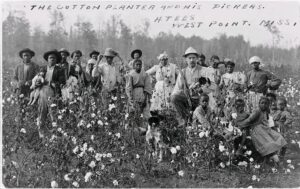
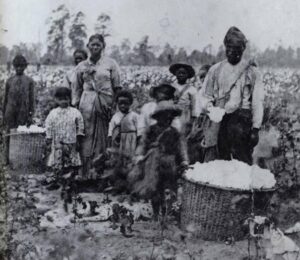
Remembering this is not about guilt. It is about accuracy. When we understand how the domestic trade worked, we understand why family separation, wealth gaps, and legal definitions of property had such long-term effects. The cotton was picked by hands. Those hands were produced, bought, and sold inside the United States…See_More







Leave a Reply