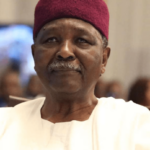
Former Head of State Gen. Yakubu Gowon has said illness affected his role at the 1967 Aburi meeting, stating in a recent Arise TV interview that “I was having a fever that was why I mistakenly agreed to the Aburi Accord.” The remark has reopened debate over what was actually agreed in Ghana and why the deal collapsed.
The Aburi Accord was reached on January 4–5, 1967, between Nigeria’s federal government led by Gowon and Eastern Region representatives led by Col. Chukwuemeka Ojukwu. The talks in Aburi, Ghana, were meant to resolve the political crisis after the 1966 coups and the mass killings of Easterners in the North. The agreement proposed a loose confederation, greater regional autonomy, and required unanimous consent of the Supreme Military Council for major decisions.
Gowon says his sickness prevented him from immediately challenging Ojukwu’s public account of the meeting. In his autobiography and in recent comments, he argues that Ojukwu presented his own interpretation as the collective agreement. “What Ojukwu said, therefore, merely conformed to his own personal agenda, not the agreed position at Aburi and not what the generality of Nigerians wanted,” Gowon wrote.
He maintains that the federal government acted in good faith after Aburi. On March 17, 1967, he issued Decree No. 8, which he describes as decentralising the government “completely” and going further than the pre-1966 constitution. But he says Ojukwu rejected it when he saw it contained a no-secession clause.
According to Gowon, all other governors and SMC members present at Aburi later said Ojukwu’s version did not reflect what was agreed. He claims the Eastern governor had “merely amplified his personal contribution” at the meeting. His incapacitation, he says, meant he could not issue a counter-statement as planned, allowing Ojukwu to set the narrative unchallenged.
The failure of the Aburi Accord is widely seen as a key trigger for the Nigerian Civil War, which lasted from 1967 to 1970. Ojukwu’s side argued the federal government reneged on the deal, while Gowon’s camp said Ojukwu’s interpretation would have weakened the federation beyond repair….See More

Leave a Reply