
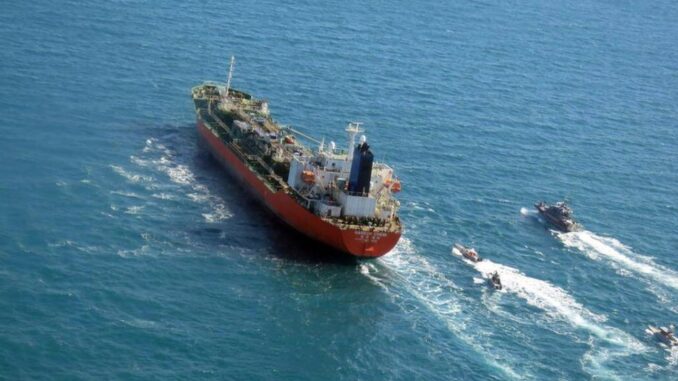
South Korea has dispatched a special envoy to Iran to negotiate safe passage for its oil tankers through the Strait of Hormuz, a move that follows a phone call between South Korean Foreign Minister Cho Tae-yul and Iranian Foreign Minister Abbas Araghchi in the wake of the fragile US-Iran ceasefire announced earlier this week.
The decision reflects the urgency with which Seoul is treating the situation, as approximately twenty-six South Korean vessels carrying one hundred and eighty crew members remain affected by Iranian restrictions on the Strait, the narrow waterway that handles roughly twenty percent of global oil flows and has been effectively closed or heavily contested since the US-Iran conflict escalated in early 2026.
The phone call between the two foreign ministers addressed not only the immediate issue of stranded vessels but also broader bilateral concerns including South Korea’s frozen assets in Iran, trade relations, and the security of Korean nationals and interests in the region.
The decision to follow up with a special envoy indicates that Seoul views the situation as requiring direct high-level diplomacy rather than relying on multilateral frameworks or waiting for the US and Iran to resolve their differences through whatever process may or may not emerge from the current ceasefire.
South Korea’s approach is pragmatic and self-interested in the best sense. The country is heavily dependent on imported energy, and any prolonged disruption to oil shipments through the Strait has direct consequences for its economy, energy security, and the companies whose vessels and crews are currently stuck in limbo.
Unlike the United States, which has the military power to attempt to force the Strait open, or China, which has the leverage that comes from being Iran’s largest trading partner, South Korea must negotiate from a position of relative weakness. It needs Iranian cooperation, and it is willing to engage directly to get it.
The timing of the envoy dispatch, coming just after the ceasefire announcement, suggests that South Korea sees a narrow window of opportunity to secure concessions or agreements while both the US and Iran are nominally committed to de-escalation. If the ceasefire collapses, as many expect it will, the space for diplomacy narrows and the risk to Korean vessels and crew increases. By moving quickly, Seoul is hedging against that collapse and trying to extract its people and assets before the situation deteriorates further.
The twenty-six ships and one hundred and eighty crew members represent a significant liability. The crews are stranded in a conflict zone, unable to transit the Strait without Iranian approval and potentially at risk if hostilities resume. The vessels themselves, many of them oil tankers, are valuable assets that cannot be abandoned or written off. And the cargo they carry or were meant to carry represents economic commitments that Korean companies and their customers are depending on.
The longer the ships remain stuck, the greater the financial and reputational cost to South Korea’s shipping industry and energy sector….See More
Leave a Reply