
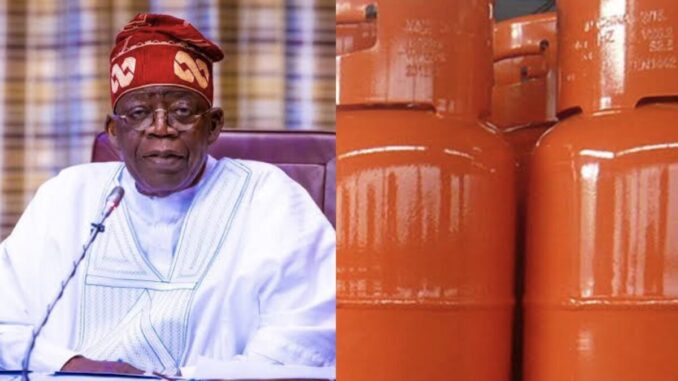
Nigerians are bracing for another wave of price increases as cooking gas prices are projected to hit ₦1,500 per kilogram in the coming weeks. The expected rise follows ongoing shortages at depots and surging domestic demand, all against the backdrop of economic reforms under President Bola Tinubu that have driven up costs across essential goods and services.
Current depot prices for liquefied petroleum gas range from ₦1,060 to ₦1,085 per kilogram, according to data from major suppliers including Dangote Refinery. Retail prices, however, already average around ₦1,300 per kilogram in many parts of the country. Data released by the National Bureau of Statistics in March 2026 showed that a 5kg cylinder refill was already costing approximately ₦1,531 per kilogram, driven largely by forex pressures and shifts in government policy on subsidies and imports.
The supply squeeze at depots has been attributed to a combination of factors. Increased domestic consumption has put pressure on available stock, while foreign exchange volatility has made importation more expensive for dealers who still rely heavily on offshore supplies. Even with the Dangote Refinery now producing LPG locally, distribution bottlenecks and pricing structures have prevented relief from reaching consumers at scale.
Nigerians who depend on cooking gas for daily meals are feeling the burn. In markets across Lagos, Abuja, and Port Harcourt, vendors report that customers are cutting back on refills or reverting to charcoal and firewood. A trader in Ketu, Lagos, said customers now ask for half or quarter refills just to stretch their budgets. Another vendor in Abuja noted that some families have stopped using gas entirely and switched to kerosene stoves, despite kerosene prices also climbing.
Public reactions on social media have been sharp and unforgiving. One user posted, “I just refilled 12.5kg for ₦16,000. That is ₦1,280 per kg. If it reaches ₦1,500, many homes will go dark and cold.” Another wrote, “We are paying ₦1,700 per kg in some areas already. This government has turned survival into a luxury.” A third commenter from Enugu said, “I bought at ₦1,300 last week. Now they are saying ₦1,500 is coming. What exactly are we supposed to do?”
The anger is not just about the price itself but about the broader sense that government reforms have made life harder, not easier. Subsidy removal on petrol, floating of the naira, and electricity tariff hikes have all contributed to a cost-of-living crisis that has left millions struggling. Cooking gas, once seen as a cleaner and more affordable alternative to kerosene, is now slipping out of reach for low and middle-income households.
The situation ties directly to the Tinubu administration’s economic agenda, which has prioritized deregulation and market-driven pricing. While officials argue these steps are necessary to end decades of subsidy spending and attract investment, ordinary Nigerians are bearing the immediate pain. Inflation remains above 28 percent, and wages have not kept pace with the cost of food, transport, fuel, and now cooking gas.
Civil society groups and consumer protection advocates have called on the government to intervene. Some have suggested temporary price caps or targeted subsidies for households. Others are pushing for faster rollout of locally refined LPG to reduce dependence on imports and stabilize prices. So far, there has been no official response from the presidency or the Ministry of Petroleum Resources.
For millions of Nigerian families, the rising cost of cooking gas is not a policy debate. It is a daily crisis. Mothers are cutting meals. Children are eating less. Vendors are losing customers. And the question on everyone’s lips is the same. How much more can we take….See More



Leave a Reply