The medical world is in shock after humanoid robots performed surgery on a human patient without direct human hands on the instruments, a first in history, according to researchers involved in the trial.
The procedure took place earlier this week at a university teaching hospital in Switzerland, where a team of AI-driven humanoid robots completed a complex laparoscopic gallbladder removal from start to finish.
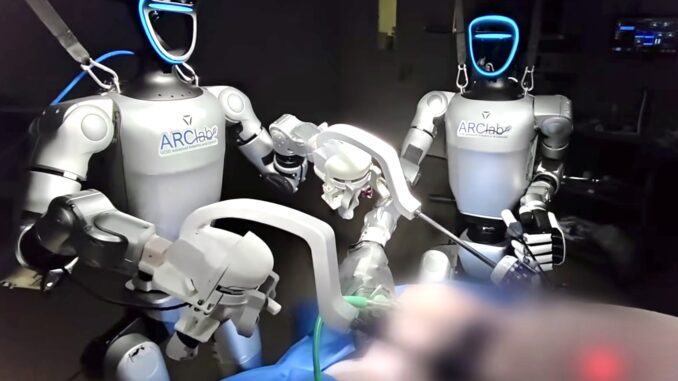
The surgical team used two humanoid robots standing 1.7m tall, each with 7-axis arms, haptic feedback hands, and vision systems modeled on human depth perception. Unlike robotic arms used in da Vinci systems, these robots moved around the table, handed tools to each other, adjusted lighting, and sutured tissue like human surgeons.
A supervising surgical team monitored from a control room. They did not touch the instruments but could pause, override, or abort the procedure at any time. The AI system ran on a combination of pre-trained surgical models and real-time computer vision that adapted to the patient’s anatomy.
The 68-year-old patient was stable throughout the 47-minute procedure and was discharged after 48 hours with no complications, doctors said.
Robotic surgery is not new. Systems like da Vinci have assisted surgeons for over 20 years. The difference here is autonomy and form. These were humanoid robots making independent decisions, not a surgeon controlling arms from a console.
Lead researcher Dr. Elena Moritz said: “The robots assessed, planned, and executed each step. They recognized bleeding, applied pressure, chose the correct suture, and closed. We were there as safety monitors, not operators.”
The trial was approved after 3 years of cadaver and animal testing, plus 10,000 simulated procedures in a virtual operating theatre.
Videos of the robots working in surgical scrubs and masks went viral within hours. Medical associations called it “a watershed moment.” Patients’ rights groups said it could expand access to surgery in areas with few specialists.
But ethicists raised urgent questions: Who is liable if a robot makes a mistake? Can AI be trusted in life-or-death decisions? Will this replace surgeons or support them?
“We are not replacing doctors,” Dr. Moritz said. “We are creating surgical partners that can operate where there are no doctors, during disasters, or in space missions.”
The hospital will run 5 more supervised humanoid surgeries before considering wider use. Regulators in the EU and US said they will review the data before approving clinical rollout…See More







Leave a Reply