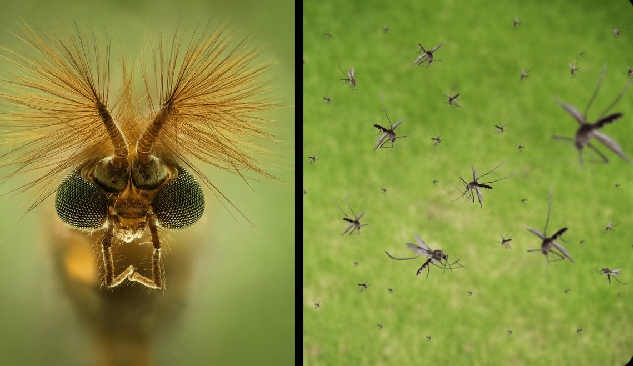
A proposal to release up to 32 million lab-bred male mosquitoes across parts of California and Florida is now under EPA review, reviving debate over biological pest control and the role of Big Tech in public health. The application comes from Debug, a project under Verily Life Sciences, which is owned by Alphabet, Google’s parent company.
The two-year plan targets _Culex_ mosquitoes, the primary vector for West Nile virus in the United States. Unlike pesticides, Debug’s method uses _Wolbachia_, a naturally occurring bacterium, to suppress mosquito populations from the inside out.
*How the Wolbachia Method Works*
The science behind the release is precise and does not involve genetically modifying biting mosquitoes.
– *Only males are released*: Male mosquitoes do not bite humans or animals and cannot transmit disease.
– *Incompatible offspring*: The lab-bred males carry a strain of _Wolbachia_. When they mate with wild females, the resulting eggs fail to hatch due to a process called cytoplasmic incompatibility.
– *Population collapse*: As fewer eggs survive, the next generation of biting, disease-carrying females declines significantly.
_Wolbachia_ is found in up to 60% of insect species worldwide and poses no known risk to humans. The EPA has previously approved similar programs for _Aedes aegypti_ mosquitoes to fight Zika and dengue. Debug itself ran smaller-scale releases in Fresno, California, beginning in 2017, claiming suppression rates above 95% in test zones.
*Scaling Up in High-Risk States*
California and Florida were selected due to persistent West Nile virus activity and large _Culex_ populations. Public health departments in both states still rely heavily on chemical spraying, which faces issues of insecticide resistance and environmental concern.
If approved, the Debug program would mark one of the largest _Wolbachia_-based releases in the U.S., deploying millions of mosquitoes weekly across multiple counties. The EPA is evaluating data on human health, ecological impact, and monitoring plans before issuing a decision.
Despite prior successful trials, reaction on X has been sharply divided. The involvement of a Google-affiliated company in open-air insect releases has fueled skepticism.
Common themes include questions about long-term ecological risks, corporate motives, and community consent. “Why is Big Tech releasing bugs in our neighborhoods?” wrote one user. Others raised concerns about mission creep and regulatory oversight, even though the males cannot bite and the bacteria are not genetically engineered.
Supporters counter that the method is pesticide-free, self-limiting, and has a decade of international safety data. The World Mosquito Program has used _Wolbachia_ in 14 countries with no reported adverse human effects.
The EPA’s review includes a public comment period. If approved, local vector control districts would coordinate releases and monitor mosquito populations with traps. Verily states all data will be shared with regulators.
For now, health officials continue to recommend standard precautions: eliminate standing water, use EPA-registered repellent, and wear long sleeves at dusk and dawn….See More






Leave a Reply