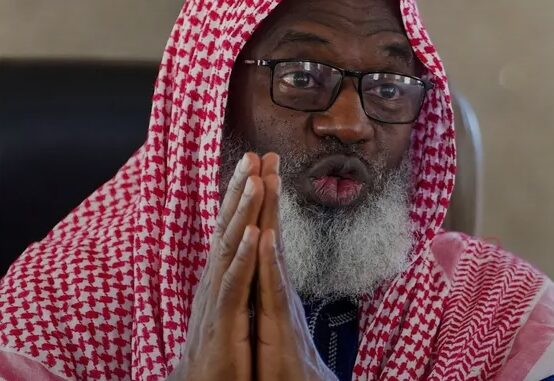
Controversial Islamic cleric Sheikh Ahmad Gumi has once again denied any links to bandit groups operating in Nigeria’s Northwest and North-Central regions, insisting that he remains a loyal citizen of the country.
Gumi made the statement while addressing concerns over his frequent engagements with armed groups in the forests of Zamfara, Kaduna, and Niger states. For years, the cleric has positioned himself as a mediator between the government and bandits, claiming that dialogue is the only way to end the cycle of kidnappings, killings, and cattle rustling that has displaced thousands.
“I have no association or link with bəndits in Nigeria. I am a loyal citizen,” Gumi said. “My involvement is purely to seek peace and to bring these people to the table so that innocent Nigerians can sleep with their eyes closed.”
The cleric’s role has drawn criticism from security analysts, politicians, and victims of banditry who argue that negotiating with armed groups only emboldens them. Critics say his public meetings with bandits, some of which have been filmed and circulated online, give the groups legitimacy and media attention they would not otherwise have.
Gumi has consistently rejected the label of “bandit apologist,” maintaining that his approach is based on religious and humanitarian grounds. He argues that many of the young men who take up arms are herders pushed to the fringes by poverty, climate change, and the collapse of grazing routes. According to him, addressing their grievances and offering amnesty, education, and economic opportunities would do more to restore peace than military action alone.
Security agencies have not publicly linked Gumi to any criminal activity, but his statements have often put him at odds with government officials who insist on a hardline approach. In 2021, the Kaduna State government distanced itself from his mediation efforts, saying it would not negotiate with terrorists.
Despite the backlash, Gumi maintains that dialogue remains the only sustainable path forward. He has urged the federal government to create a structured framework for engagement that includes traditional rulers, civil society, and religious leaders, rather than leaving the process to individuals.
The cleric also called on Nigerians to avoid stigmatizing entire communities based on the actions of a few. “Not every Fulani is a criminal, just as not every Nigerian is corrupt,” he said. “We must separate the crime from the people….See More







Leave a Reply