
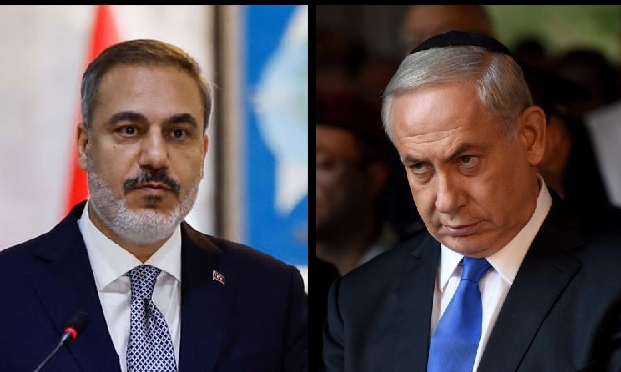
Turkish Foreign Minister Hakan Fidan has accused Israel of exploiting regional distractions to create a “fait accompli” in Lebanon, claiming Israeli actions undermine the fragile ceasefire with Hezbollah.
The statement reflects Turkey’s deepening concerns about what Ankara characterizes as Israeli expansionism using security pretexts to acquire territory throughout the Middle East.
Posted by geopolitics outlet BRICSinfo with photos of Fidan and Israeli Prime Minister Benjamin Netanyahu, the accusation amplifies diplomatic friction between Turkey and Israel amid tentative regional pauses in hostilities following months of intense conflict.
Fidan’s remarks suggest Turkey believes Israel is using the confusion and international focus on other crises to establish facts on the ground in Lebanon that will be difficult to reverse diplomatically.
The concept of “fait accompli,” French for accomplished fact, refers to actions taken unilaterally to create new realities that others must then accept as done deals rather than negotiate.
In the Middle Eastern context, the term often describes Israeli settlement expansion, territorial control, or security arrangements that change circumstances on the ground in ways that become permanent regardless of international objections.
Fidan’s use of this specific terminology indicates Turkey believes Israel is deliberately timing actions in Lebanon to coincide with periods when international attention is directed elsewhere, making Israeli moves less visible and reducing immediate pressure for reversal.
The ceasefire between Israel and Hezbollah that Fidan references was announced recently following intense fighting that escalated alongside the broader US-Israel-Iran confrontation.
That ceasefire was presented as a step toward regional de-escalation, with both sides agreeing to halt hostilities and pull back from forward positions. However, Fidan’s accusation suggests Turkey has intelligence or observations indicating Israel is not fully complying with ceasefire terms, instead using the lull in active fighting to consolidate control over Lebanese territory, establish security zones, or create buffer areas that extend Israeli effective control beyond recognized borders.
Turkey’s broader concerns about Israeli expansionism reflect Ankara’s view that Israel systematically uses security justifications to acquire territory beyond internationally recognized boundaries. Turkish officials point to Israeli control of the Golan Heights, originally Syrian territory seized in 1967 and later annexed, as a historical template.
They note continued Israeli settlement expansion in the West Bank despite international law declaring such settlements illegal. From Turkey’s perspective, Israeli actions in Lebanon follow the same pattern: cite security threats, move forces into disputed areas, establish control, and then present the new situation as necessary and irreversible for Israeli security.
The timing of Fidan’s statement is significant given multiple simultaneous regional crises competing for international attention. The ongoing Strait of Hormuz crisis involving US-Iran confrontation, tensions around Iranian nuclear facilities, and broader instability across the Middle East create an environment where developments in Lebanon might receive less scrutiny than they would during calmer periods.
Turkey appears to believe Israel is calculating that global powers focused on preventing wider US-Iran war have limited bandwidth to also pressure Israel over Lebanese territorial issues, creating opportunity for unilateral action….See More





Leave a Reply