
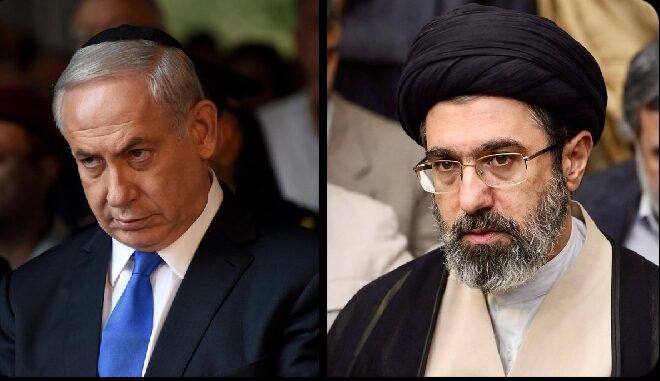
Israeli Defense Forces officials have briefed that Iran’s new Supreme Leader, Mojtaba Khamenei, is more hardline and less open to diplomatic engagement than his father, Ayatollah Ali Khamenei, who was killed in late February 2026 during US-Israeli strikes that also eliminated senior Iranian officials.
Mojtaba was appointed Supreme Leader in March 2026, ascending to the position under circumstances defined by violence, loss, and a nation at war.
The IDF assessment, shared widely across international outlets and social media, fuels debate about escalation risks and raises the question of whether the targeted killing of Iran’s previous leadership has made the conflict more difficult to resolve or simply replaced one adversary with another who is even less willing to negotiate.
The context of Mojtaba’s rise is critical. He did not assume power through a gradual transition or a planned succession.
He took the role after his father and much of Iran’s senior leadership were killed in strikes that Iran views as acts of war and assassination. The personal dimension of that loss, losing a father, a leader, and a symbol of the Islamic Republic in a single attack, is not incidental to how Mojtaba is likely to approach his role.
He is not governing in peacetime or presiding over a period of consolidation. He is leading a country under sustained military assault, and the expectation that he would be more conciliatory or open to compromise than his father is difficult to justify given the circumstances of his appointment.
Israel’s assessment that Mojtaba is more extreme carries weight because it comes from the intelligence and military establishment that has been tracking Iranian leadership for decades. But it also invites scepticism because framing the new leader as worse than the old one serves a narrative purpose.
It justifies the continuation or escalation of military operations by suggesting that diplomacy is even less viable now than it was before, and it deflects responsibility for the failure of diplomatic efforts by attributing that failure to Iranian intransigence rather than the actions that created the conditions under which diplomacy became impossible.
The claim that Mojtaba is less open to talks is being used in some circles to argue that killing Ali Khamenei was a mistake not because it was morally wrong but because it was strategically counterproductive.
If the goal was to weaken Iran or create an opening for regime change or negotiation, replacing an aging leader with a younger, more hardline successor who has personal reasons to seek revenge does not advance that goal. It entrenches the conflict and ensures that the next generation of Iranian leadership is defined by resistance, retaliation, and a refusal to accommodate the demands of the countries that killed their predecessors….See More


Leave a Reply