
South Africa has ruled out any government compensation for Nigerians and other foreign nationals who abandoned properties during recent evacuations, a position confirmed by Minister in the Presidency, Khumbudzo Ntshavheni. The decision has intensified diplomatic and public debate amid rising anti-migrant tensions.
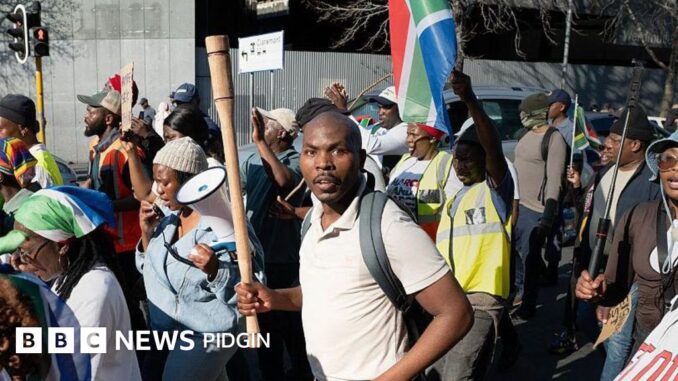
An X post from @TrendingEx reported the development alongside an image of South African protesters at anti-migrant demonstrations. The protests have been driven by South Africa’s high unemployment rate, estimated at around 43%, and public accusations that foreigners, including Nigerians, are linked to crime and are competing for scarce jobs…Discover More
Minister Ntshavheni stated that the government will not make payouts for properties left behind, whether the assets were legal or illegal. According to the minister, the policy is clear: no state funds will be used to compensate individuals who chose to evacuate or leave the country.
South African authorities added that Nigerians or other foreigners who hold legally registered properties remain free to sell them on the open market through normal legal processes. However, properties that are informal, undocumented, or deemed illegal will not qualify for any form of compensation or state intervention.
Nigeria’s government had previously announced plans to document businesses, homes, and other assets abandoned by Nigerians returning from South Africa, with the aim of seeking compensation. Officials said the documentation was intended to protect citizens’ interests and to engage South Africa diplomatically on the matter.
That request now faces a firm rejection from Pretoria, leaving many returnees with limited options to recover value from properties they could not sell or secure before leaving.
The dispute comes against a backdrop of economic pressure in South Africa. With unemployment hovering near 43%, many citizens say they are struggling for work, housing, and basic services. Demonstrations captured in the image reflect growing frustration, with some protesters accusing foreign nationals of taking jobs and contributing to crime. Nigerians have often been at the center of these accusations.
Analysts note that such tensions frequently spike during economic downturns, and that diplomatic engagement is critical to prevent escalation and protect the rights of documented migrants.
For Nigerians with legally registered assets in South Africa, the government’s advice remains to pursue private sales through legal channels. For those with informal arrangements, there is currently no avenue for state compensation…See More






Leave a Reply