
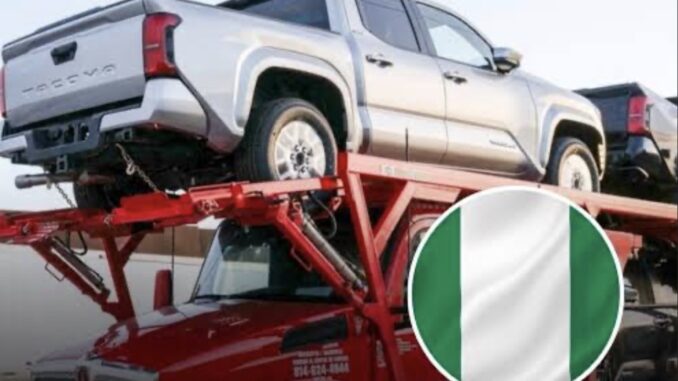
Nigeria’s 2026 fiscal policy has introduced a 2–4 percent “green tax” surcharge on imported vehicles with engine capacities of 2,000cc and above, effective July 1.
The measure, approved on April 1 and detailed in official circulars reported by Reuters, is aimed at discouraging the importation of high-emission vehicles while generating additional government revenue and promoting cleaner transportation options.
Under the new policy, vehicles with engines below 2,000cc are exempt from the surcharge. Electric vehicles, mass transit buses, and locally manufactured cars are also excluded from the green tax. Government officials say the policy is designed to align Nigeria with global efforts to reduce carbon emissions and encourage a gradual shift toward more environmentally friendly transportation.
According to the official circulars, the surcharge will apply specifically to imported vehicles that fall within the designated engine capacity range. The Federal Government has framed the move as both an environmental intervention and a fiscal measure intended to broaden revenue sources without directly increasing income or consumption taxes.
Authorities argue that larger engine vehicles generally consume more fuel and emit higher levels of greenhouse gases. By imposing an additional cost on such imports, the government hopes to incentivize consumers to opt for smaller engines, electric vehicles, or locally assembled alternatives.
The exemption for mass transit buses is also positioned as a step to support public transportation and reduce reliance on private cars.
However, the policy has sparked criticism from sections of the public and industry observers.
Many Nigerians have questioned the timing, pointing to persistent challenges such as unreliable electricity supply, limited electric vehicle charging infrastructure, and inadequate mass transit systems. Critics argue that without viable alternatives in place, the green tax could amount to additional financial pressure on consumers already grappling with high inflation and rising import costs….See More






Leave a Reply