
Russia has stated that the United States cannot seize Iran’s enriched uranium without Tehran’s explicit consent, with Kremlin officials emphasizing Iran’s sovereign rights over its nuclear materials.
The comments come amid ongoing diplomatic tensions surrounding Iran’s nuclear program and broader US-Iran negotiations.
According to Russian officials, any transfer or handling of Iran’s enriched uranium must be conducted with the approval of the Iranian government and in accordance with international agreements.
The Kremlin framed the issue as a matter of sovereignty and international law, signaling opposition to unilateral action.
The statement follows reports that Russia previously proposed storing Iran’s enriched uranium stocks on its territory as part of a potential US-Iran peace arrangement. That proposal was reportedly rejected. US President Donald Trump has previously declared that the United States would directly obtain the material as part of ensuring Iran does not retain high levels of enrichment capacity.
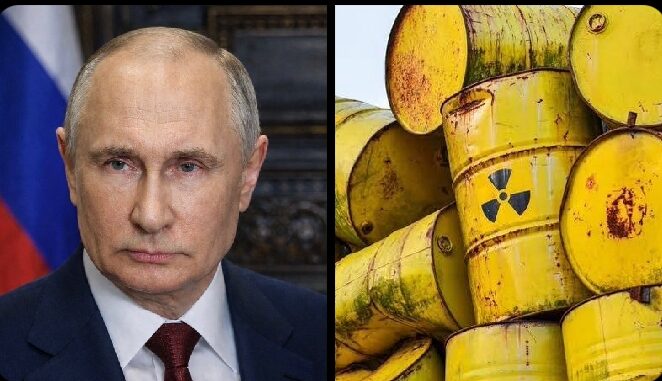
Images accompanying the coverage show Russian President Vladimir Putin alongside radiation-marked barrels, underscoring Moscow’s position as a major nuclear power and stakeholder in global nonproliferation discussions.
The messaging highlights Russia’s broader stance within a multipolar framework that challenges unilateral Western decision-making.
Iran’s enriched uranium stockpile has been a central issue in nuclear talks, particularly regarding enrichment levels and oversight mechanisms.
Western governments argue that limiting or removing highly enriched material is critical to preventing weaponization. Tehran maintains that its nuclear program is for peaceful purposes and that its rights under international agreements must be respected.
Russia’s position adds complexity to negotiations, as Moscow has historically played a role in facilitating nuclear arrangements, including earlier agreements involving uranium transfer and reactor fuel supply.
However, geopolitical tensions between Russia and Western powers have intensified, influencing diplomatic coordination….See More
Leave a Reply