
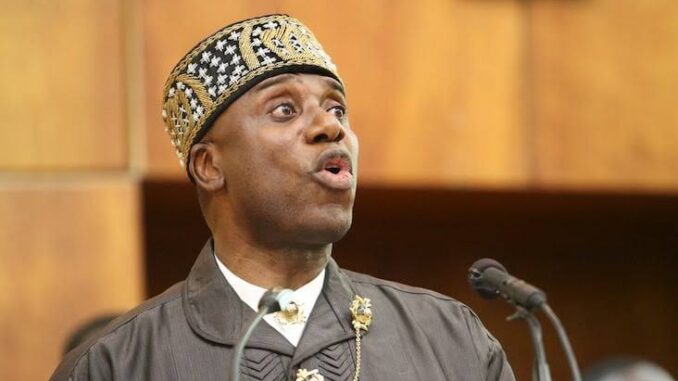
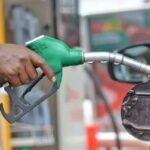
According to a report by DAILY POST on Friday, October 9, 2026, ADC vice-presidential candidate Rotimi Amaechi has outlined how the party plans to reintroduce fuel subsidy and bring down petrol prices if elected in 2027.
Amaechi spoke after ADC presidential candidate Atiku Abubakar proposed restoring fuel subsidy as part of efforts to ease the economic hardship facing Nigerians. The proposal has triggered debate over how the opposition intends to fund it and its effect on the economy.
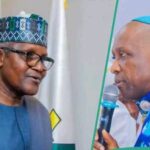
The former Minister of Transportation said the plan would involve a direct arrangement with Aliko Dangote’s refinery. Under the proposal, government would sell crude to the refinery at a fixed rate, then recover part of the difference to subsidize pump prices.
“According to Amaechi, “I will sell to Dangote at N10,000. The difference will be N5,000. I will then sit with Dangote and tell him to give me a subsidy of N5,000””
He explained that government would negotiate with the refinery operator to ensure the agreed amount is used to provide relief to consumers at the pump.
Amaechi argued that implementing the proposal would reduce petrol prices and lessen the financial pressure on households, transport operators and small businesses. He added that lower fuel costs could also bring down the price of food and other essential goods.
The statement comes amid continued public concern over the removal of fuel subsidy by President Bola Ahmed Tinubu’s administration in 2023. Since then, petrol prices have risen sharply, driving up transportation and production costs across the country.
The increase has fed into food inflation and operating expenses for manufacturers, making subsidy restoration one of the biggest talking points ahead of 2027.
“According to Amaechi, the ADC believes targeted intervention through the Dangote refinery can help stabilize prices without returning to the old subsidy regime that was criticized for leakages.”
Economic commentators remain divided on the proposal. Supporters say it could provide immediate relief, while critics question its sustainability and the mechanics of forcing a private refinery to absorb subsidy costs.
With the 2027 elections approaching, the debate over fuel pricing and subsidy policy is expected to dominate campaign discussions.

Leave a Reply