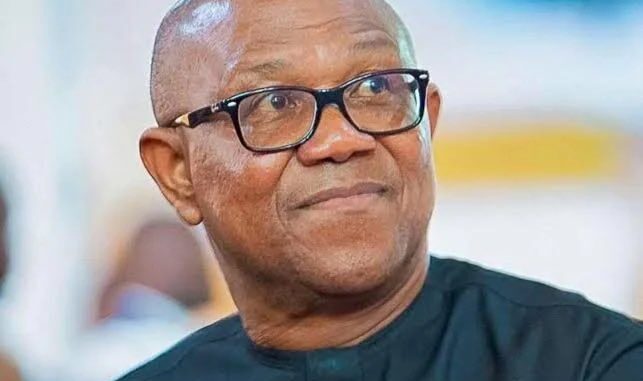
Labour Party’s 2023 presidential candidate, Peter Obi, has taken another swipe at the Tinubu administration, saying many business owners have been pushed into small-scale trading because of economic hardship.
“I pity Nigerians,” Obi said on Tuesday at a town hall in Abuja. “Those with businesses when Tinubu came in now sell kuli-kuli.”
Obi was responding to questions on the state of the economy two years into President Bola Tinubu’s tenure. He argued that inflation, high energy costs, and weak purchasing power have forced many entrepreneurs to downsize or shut down completely.
“People who had shops, factories, and service businesses cannot cope anymore,” he said. “So they have gone to selling kuli-kuli, groundnuts, sachet water, just to survive. That is not progress. That is regression.”
Kuli-kuli, a fried peanut snack sold in small packs on the street, has become a symbol in recent debates about hardship and micro-trading. Obi used it to illustrate how far some businesses have fallen.
The Tinubu administration has said its reforms, including fuel subsidy removal, forex unification, and infrastructure spending, are painful but necessary for long-term growth. Officials argue that the economy is adjusting and that growth will return as investments mature.
FCT Minister Nyesom Wike and other APC leaders have pointed to ongoing road, health, and school projects as proof that government is working. They say business recovery takes time after decades of structural problems.
Obi’s comment went viral within hours. Supporters said he was speaking for traders and SMEs who have seen costs rise faster than sales. “Many of us know someone who closed shop and is now hawking,” one X user wrote.
APC supporters pushed back. “Kuli-kuli is also a business,” a party member said. “Nigerians are resilient. The reforms will yield results if we stay the course.” Economists noted that micro-trade often expands during downturns as people seek quick cash flow, but it is not a substitute for stable, larger enterprises.
Nigeria’s inflation rate has remained elevated through 2025 into 2026, while food and transport costs have pressured household budgets. SME associations have repeatedly called for cheaper credit, stable power, and lower import duties on raw materials.
Obi said the solution is “production, not consumption.” He urged government to prioritize manufacturing, agriculture, and power, so businesses can scale instead of shrink….See More







Leave a Reply