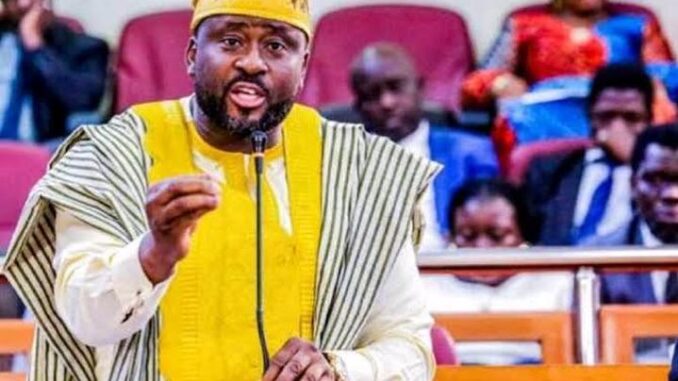
Former Lagos State House of Assembly member and actor, Desmond Elliot, has called for greater ideological direction in Nigerian politics, arguing that the country’s political space is largely driven by personalities rather than clearly defined principles.
Speaking on a television programme hosted by Morayo Afolabi-Brown on Tuesday, June 23, 2026, Elliot reflected on his 12 years in politics and questioned the ideological distinctions among Nigeria’s leading political figures.
According to him, politicians and voters often focus on individuals instead of the ideas and values they represent. He cited President Bola Ahmed Tinubu, former Labour Party presidential candidate Peter Obi, and former Vice President Atiku Abubakar as examples while questioning what fundamentally separates them beyond party affiliations.
Elliot said he often asks himself what ideological differences exist among the country’s major political actors. He stressed that politicians should be able to define their positions on key issues such as economic policy, social welfare, and governance philosophy instead of aligning solely with influential political personalities.
The former lawmaker argued that one of the biggest weaknesses of Nigeria’s democracy is the lack of clearly articulated political ideologies that distinguish competing visions for national development. He maintained that political actors should be identified by their ideas, values, and policy priorities rather than shifting alliances.
Elliot also called for broader conversations about Nigeria’s political future, noting that the country’s ethnic, cultural, and linguistic diversity requires a democratic model tailored to its unique realities. He urged stakeholders to focus on governance structures and national priorities rather than limiting political discourse to elections and personalities.
His comments come amid increasing discussions about political realignments ahead of the 2027 general elections, with growing speculation over possible alliances, opposition strategies, and the future direction of Nigeria’s democratic process.




Leave a Reply