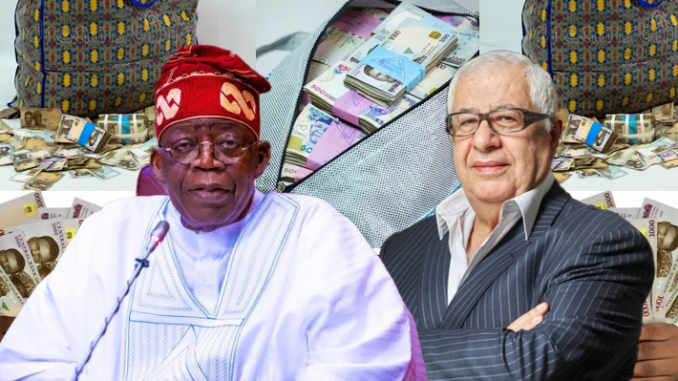
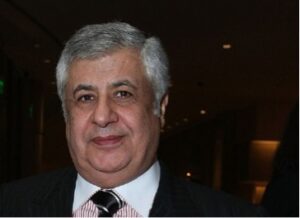
The name Gilbert Chagoury comes up whenever people talk about money, politics, and construction in Nigeria. He is a Lebanese-Nigerian billionaire who built a business empire, stayed close to power through several governments, and has faced serious legal controversies along the way.
Chagoury was born in Lagos. He turned the Chagoury Group into a large conglomerate with interests in construction, real estate, manufacturing, and hospitality.
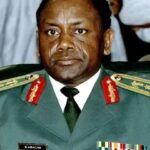
His political access grew sharply during the era of military dictator Sani Abacha in the 1990s. According to reports and documentaries, he became a close associate of the Abacha regime at a time when Nigeria’s public finances were under tight, centralized control.
One of the most cited cases involves money laundering. In 2000, a Swiss court convicted Chagoury for money laundering and aiding a criminal organization. The case focused on his role in moving over 120 million dollars in funds from the Central Bank of Nigeria to accounts linked to the Abacha family through Swiss banks.
He did not serve prison time. He later secured immunity and plea arrangements in Switzerland and Nigeria. As part of the settlement, he paid a fine of one million Swiss Francs and agreed to return 66 million dollars to the Nigerian government. The Swiss conviction was eventually expunged from his record. It is important to note that the 2000 conviction was legally categorized as money laundering, not a general fraud charge. The word fraud is sometimes used loosely in public discussion, and it also appeared in later U.S. campaign finance contexts where his name was linked to straw donor arrangements involving former congressman Jeff Fortenberry.
To rebuild his public image, Chagoury cultivated relationships in Washington, D.C. over the years. Reports mention donations to American political groups and ties to the Clinton Foundation. Critics argue this helped him buy international legitimacy while the Abacha government was still in power. Supporters say it was normal business networking and philanthropy.
Chagoury’s most visible project is Eko Atlantic, a planned luxury city on reclaimed land off Lagos. The development was built on an area that once included Bar Beach. In 2008, thousands of residents were cleared from that area. The eviction and relocation process drew criticism from activists and affected communities. The project moved forward with government approvals, including support from the then-governor of Lagos, Bola Tinubu who’s now the Nigeria president.
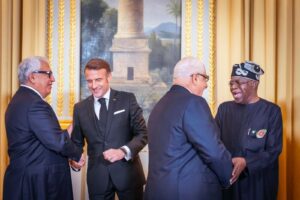
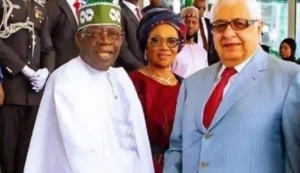
Chagoury remains active in Nigeria’s infrastructure space. With Bola Tinubu now president, his group has been linked to major government projects, including the Lagos-Calabar Coastal Highway. In January 2026, he received one of Nigeria’s highest national honors, the Grand Commander of the Order of the Niger.
Most Nigerian textbooks do not detail how private business actors can operate as gatekeepers between the state and international finance, or how court settlements, fines, and restitution can close cases that began with money laundering allegations. Chagoury’s story is often used as a case study in that gap.
The record shows two realities at once. First, a businessman who built projects, created jobs, and kept access across different administrations. Second, a Swiss money laundering conviction tied to the movement of stolen state funds, followed by fines, restitution, and the removal of that conviction from his record.
Whether people describe him as a builder or as a symbol of elite impunity, Gilbert Chagoury’s name sits at the center of conversations about Nigeria’s political economy. His career touches military rule, civilian government, foreign lobbying, urban redevelopment, and the limits of legal accountability. That is why his story continues to circulate outside classrooms and inside public debate….See More
Leave a Reply