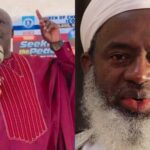
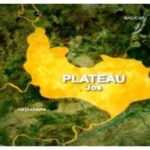
Reverend Ezekiel Dachomo, a Church of Christ in Nations leader and advocate for persecuted communities in Nigeria, has condemned a night attack in Mbwelle village, Bokkos Local Government Area of Plateau State, that killed five family members including a pregnant woman and her unborn child on April 9, 2026.
According to Dachomo’s account, attackers he described as armed Fulani militants from the nearby Korong settlement used guns and machetes during a two-hour assault that included positioning snipers on escape routes to prevent victims from fleeing.
Dachomo alleged that the attackers shouted “Allahu Akbar” during the raid and that military forces stationed nearby failed to intervene despite the prolonged nature of the attack and the proximity of the violence to their location.
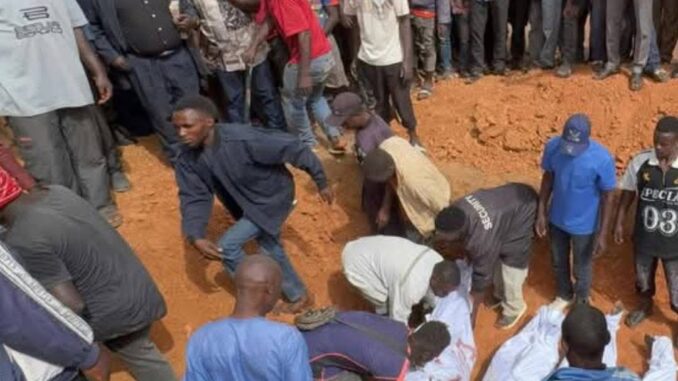
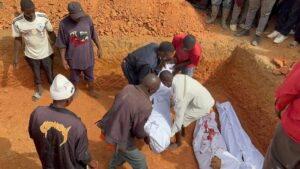
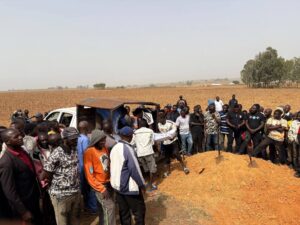
The allegations, shared through social media posts that included images from a mass burial showing community members handling shrouded bodies with visible bloodstains and digging graves in red soil, have drawn attention to what Dachomo and other local leaders describe as a pattern of attacks on Christian farming communities in Plateau State by armed groups that operate with impunity and, in some cases, appear to receive protection or tolerance from security forces. Dachomo further alleged that the assailants retreated after the attack to a forcibly occupied settlement where an Operation Enduring Peace military vehicle was later seen, a claim that, if accurate, would suggest either coordination between the attackers and military personnel or a failure by the military to apprehend attackers whose location was known.
The details of the attack, as provided by Dachomo, paint a picture of calculated violence. The use of snipers to block escape routes suggests planning and tactical coordination rather than a spontaneous raid. The two-hour duration indicates that the attackers operated without fear of interruption or response from security forces. And the specific targeting of a family, resulting in five deaths including a pregnant woman and her unborn child, reflects a level of brutality that has become tragically routine in Plateau State and other parts of Nigeria’s Middle Belt where ethno-religious violence has claimed thousands of lives over the past decade.
The claim that military forces failed to intervene is one that has been made repeatedly in the context of attacks in Plateau, Benue, and other conflict-affected states.
Residents and community leaders have accused the military of arriving after attacks have concluded, of failing to pursue attackers even when their locations are known, and in some cases of providing protection to settlements or groups that residents believe are responsible for the violence.
The military has generally responded to such allegations by citing operational challenges, difficult terrain, and the need to avoid escalation or civilian casualties, but the explanations have done little to address the perception that security forces are either unable or unwilling to protect Christian farming communities from attack.
The reference to attackers shouting “Allahu Akbar,” an Islamic phrase meaning “God is greatest,” is significant because it frames the violence in religious terms and fuels narratives that the attacks are not just about land, resources, or criminal opportunism but about religious or ethnic targeting. Whether the attackers’ motivations are primarily religious, economic, or political is contested, but the consistent use of religious language during attacks and the targeting of Christian communities has created a perception among victims and their advocates that the violence is religiously motivated and that it is being tolerated or enabled by a federal government and security establishment that they view as biased….See More

Leave a Reply