Josie, a 17-year-old lioness from South Africa’s Addo Elephant National Park, survived an extraordinary five years of complete blindness thanks to her two daughters who guided her, hunted for her, and fiercely protected her in the wild.
The remarkable story, shared by the Creepy nature account on social media, demonstrates exceptional familial loyalty among lions and challenges assumptions about survival in nature for disabled animals.
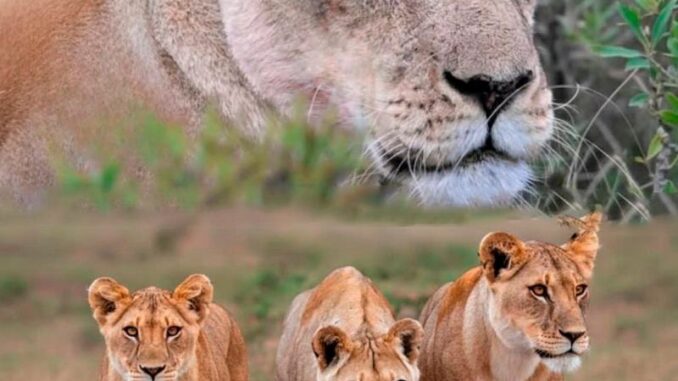
Photographs accompanying the post show Josie with distinctive eye discoloration indicating her blindness, alongside her devoted daughters who remained by her side throughout her final years until her recent passing at an age well beyond the typical lifespan for wild lions.
Josie lost her sight around age 12, an event that would normally mean certain death for a lion in the wild. Lions depend heavily on vision for hunting, navigating territory, and detecting threats from rival prides or other predators. A blind lion living alone would quickly starve or fall victim to hyenas, male lions, or other dangers.
However, Josie’s two adult daughters refused to abandon her despite the burden caring for her would impose on their own survival. Instead, they adapted their behavior to accommodate their mother’s disability, keeping her integrated within their small pride and ensuring she continued to eat, drink, and remain safe.
The daughters’ care took multiple forms according to wildlife observers who documented Josie’s final years. They used contact calls, specific vocalizations that allowed Josie to locate them and stay close as the group moved through the bush. When hunting, the daughters would make kills and then guide Josie to the carcass, allowing her to feed alongside them rather than leaving her behind or forcing her to compete.
They positioned themselves protectively around Josie when resting, creating a barrier between their vulnerable mother and potential threats. During territorial encounters with other lions, the daughters reportedly defended Josie aggressively, compensating for her inability to detect and respond to danger.
This level of sustained care for a disabled family member is extremely rare in the wild, where the harsh realities of survival typically mean that injured or disabled animals are abandoned or even driven away from groups.
Resources are scarce and competition intense, making supporting a non-contributing member seemingly irrational from a survival perspective. Yet Josie’s daughters maintained their commitment for five years, suggesting that lion social bonds and familial loyalty can be stronger and more complex than often assumed.
Their behavior demonstrates cognitive abilities including planning, empathy, and long-term commitment that challenge simplified views of animal behavior as purely instinctive.
The photographs shared in the viral post show Josie’s clouded, discolored eyes that clearly indicate her blindness, a condition possibly caused by injury, disease, or age-related degeneration. Despite this severe disability, the images also show her appearing relatively healthy and well-fed, evidence that her daughters’ care was effective in maintaining her quality of life.
The close physical proximity between Josie and her daughters in the photos illustrates the tight bond that made her survival possible, with the younger lionesses clearly comfortable staying within constant contact range of their mother.
Josie’s survival to age 17 is itself remarkable, as wild lionesses typically live only 12-16 years, with most dying younger due to injuries, disease, starvation, or violence.
Her ability to exceed normal wild lifespan despite total blindness is a testament both to her daughters’ devotion and to the adaptability of lion social structures. The pride effectively restructured itself around Josie’s needs, with the daughters taking on additional burdens to keep their mother alive and integrated within their family unit….See More






Leave a Reply